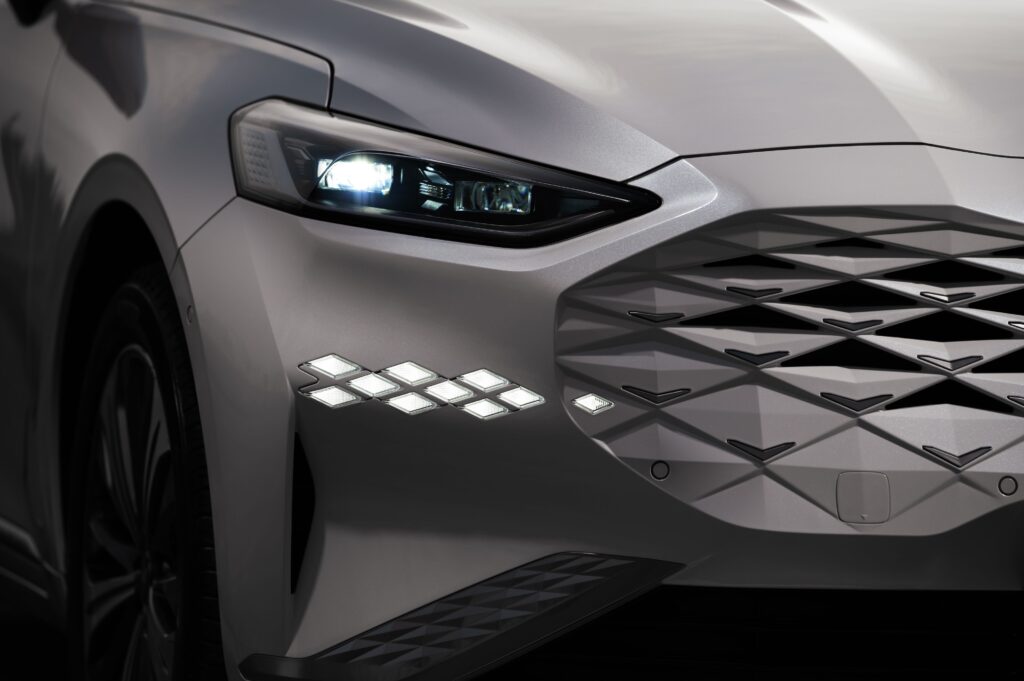

Daytime visibility matters every time you drive. Good daytime running lights help other drivers notice your vehicle sooner, especially in changing weather, shaded roads, and heavy traffic.
LED technology has made automotive lighting brighter, more efficient, and more compact. However, replacing an original light source isn’t simply a matter of choosing the brightest option available. Compatibility, beam performance, electrical behavior, and U.S. lighting requirements all matter.
What Are LED Daytime Running Bulbs?
LED daytime running bulbs are light sources designed for daytime running light applications or compatible automotive lighting systems. They use light-emitting diodes instead of traditional filament-based sources and can provide lower power consumption, fast illumination, and a long rated operating life.
The exact design depends on the vehicle and lighting assembly.
Some vehicles use replaceable bulbs, while others have integrated LED lighting assemblies. These systems aren’t interchangeable.

How Do Daytime Running Lights Work?
Daytime running lights, commonly called DRLs, operate during daylight conditions to make a vehicle more noticeable to other road users.
The system may activate automatically when the vehicle starts or when specific conditions are met.
NHTSA’s Federal Motor Vehicle Safety Standard No. 108 covers vehicle lighting and associated equipment. NHTSA has also stated that certain LED lamp designs can serve as DRLs when the applicable requirements are met. (NHTSA)
Your vehicle’s original DRL system should therefore be treated as part of the vehicle’s complete lighting design.
Why Choose LED Technology?
Lower Power Consumption
LEDs can produce useful light with relatively low electrical power.
This can reduce the electrical load compared with some older lighting technologies.
However, actual power consumption depends on the vehicle and specific replacement product.
Fast Illumination
LEDs reach their operating light output quickly.
This characteristic suits signaling and visibility applications where immediate illumination matters.
Long Rated Life
LEDs generally have long rated operating lives.
That can reduce how often a light source needs replacement under normal conditions.
Heat, voltage, vibration, and product quality can still affect service life.
Compact Construction
LED components can fit into compact lighting designs.
This gives automotive manufacturers and lighting designers more flexibility when developing modern lamp assemblies.
LED Daytime Running Bulbs vs Halogen
Halogen bulbs rely on a heated filament to generate light.
LEDs produce light through semiconductor components.
The two technologies also differ in electrical behavior, heat production, optical characteristics, and installation requirements.
A direct physical fit doesn’t guarantee that an LED replacement will perform correctly in a lamp designed around a halogen source.
The reflector and lens were designed around specific light-source characteristics.
Can You Replace a Halogen DRL With an LED?
It depends on the vehicle and the specific lighting application.
A replacement LED needs to be electrically and optically compatible with the original system.
There can also be federal and state requirements for replacement lighting.
NHTSA notes that FMVSS No. 108 establishes requirements for original and replacement lighting equipment. (NHTSA)
For U.S. vehicles, don’t assume that an aftermarket LED bulb is automatically legal simply because it fits the socket.
Check the Bulb Size First
Automotive bulbs come in many sizes and configurations.
Common designations include various numbered bulb types, but the correct type depends on the vehicle.
Check your owner’s manual or the original bulb designation before ordering.
A bulb that looks similar may have different terminals, dimensions, power requirements, or optical characteristics.
Check Electrical Compatibility
LED replacements can behave differently from filament bulbs.
Some vehicles monitor the electrical load of their lighting circuits. A lower-current LED can sometimes trigger a bulb-out warning or other electrical issue.
Other vehicles may require specific electronics for correct operation.
Check whether the replacement product is designed for your vehicle’s electrical system.

What Brightness Should You Choose?
More brightness isn’t automatically better.
The lamp’s reflector, lens, mounting position, and optical design determine how light is distributed.
An excessively bright or poorly controlled source can create glare or produce an unsuitable light pattern.
NHTSA has addressed concerns involving replacement LED bulbs that exceeded applicable luminous-flux limitations and could create excessive glare. (NHTSA Static)
The goal should be appropriate visibility, not maximum output.
Color Matters Too
Daytime running lamps generally use a white or permitted yellow-toned light depending on the applicable lighting configuration.
Don’t assume that a blue-looking LED is better because it appears brighter.
The color and optical performance need to suit the vehicle’s lighting system and applicable requirements.
Check the Product Specifications
Before buying LED daytime running bulbs, review:
- Bulb size
- Voltage
- Power rating
- Light color
- Electrical compatibility
- Vehicle compatibility
- Heat management
- Weather resistance
- Manufacturer specifications
- Applicable compliance information
Avoid products that provide only vague claims about brightness or compatibility.
U.S. Legal Considerations
Automotive lighting rules deserve special attention in the United States.
FMVSS No. 108 applies to vehicle lighting equipment and replacement equipment. NHTSA has specifically explained that replacement lighting equipment is subject to applicable requirements. (NHTSA)
State vehicle laws can also affect what may legally be installed and operated on public roads.
For that reason, check both the federal requirements and the laws in the state where the vehicle is driven.
Installation Considerations
Replacing an automotive light source isn’t the same as changing a household bulb.
Start by checking the vehicle owner’s manual and the original bulb specification. Confirm the socket, electrical requirements, physical dimensions, and intended lighting function before purchasing a replacement.
Check the Socket
The correct socket is essential.
A bulb that fits physically may still have the wrong electrical characteristics or may not produce the required light pattern.
Check the Vehicle System
Some vehicles monitor bulb current and can display a warning when an LED replacement draws less power than the original source.
A compatible product may require additional electronics, depending on the vehicle.
Check the Light Pattern
The position of the LED chips matters.
A replacement that places its light source differently from the original bulb can produce an unsuitable beam or uneven illumination.
Follow the Manufacturer’s Instructions
Don’t modify wiring unless the product and vehicle manufacturer specifically allow it.
For permanent wiring changes, professional installation is the safer choice.

Common Buying Mistakes
Choosing the Brightest Product
Maximum brightness isn’t the goal.
NHTSA notes that vehicle lighting requirements balance visibility with excessive glare. Poorly designed or excessively intense lighting can affect other road users. (NHTSA)
Assuming Every LED Replacement Is Legal
A product being available for sale doesn’t automatically mean it’s compliant for every automotive application.
NHTSA’s FMVSS No. 108 covers original and replacement vehicle lighting equipment. (NHTSA)
Ignoring the Original Lighting Design
The reflector, lens, and light source work together.
Changing only the light source can alter the optical performance.
Buying Without Checking Compatibility
Check the exact vehicle year, make, model, trim, bulb number, and lighting function.
Don’t rely only on a generic vehicle compatibility list.
Ignoring State Requirements
Federal requirements and state vehicle laws can both matter.
Check the rules that apply where the vehicle is registered and operated.
Electrical Issues
LED replacements can create electrical problems in some vehicles.
Flickering
Flickering can result from electrical compatibility issues, poor connections, unsuitable electronics, or a defective product.
Bulb-Out Warnings
Some vehicles detect the lower current draw of an LED and interpret it as a failed bulb.
A vehicle-specific compatible product may reduce this problem.
Polarity
Some LED products are polarity-sensitive.
If the manufacturer specifies a particular orientation, follow those instructions.
Heat
LEDs produce less radiant heat than incandescent bulbs, but the electronic components still generate heat.
A suitable heat sink or thermal management system can be important.
Don’t install a product in a location where heat cannot escape as designed.

Maintenance
Keep the lens and lighting area clean.
Dirt, road film, snow, and debris can reduce the amount of useful light reaching other road users.
Inspect the housing for cracks or moisture.
Check for flickering, inconsistent brightness, or changes in color.
If a sealed lighting assembly develops condensation or water intrusion, have it inspected rather than ignoring the problem.
U.S. State Considerations
Automotive lighting laws can vary by state.
Federal Motor Vehicle Safety Standard No. 108 establishes requirements for vehicle lighting, while state law can address vehicle modifications and equipment used on public roads. NHTSA has specifically noted that state law can govern certain aftermarket LED replacement installations. (NHTSA)
This matters when replacing an original lighting system.
For example, a product designed for an off-road vehicle or show vehicle may not be suitable for normal public-road use.
Before installing an aftermarket lighting product, check your state’s vehicle equipment requirements and confirm that the product is intended for your vehicle and lighting function.
Daytime Running Lights and Turn Signals
DRLs can be positioned near turn signals, so their interaction matters.
FMVSS No. 108 includes requirements intended to prevent DRLs from masking turn signals. NHTSA states that certain DRL arrangements must deactivate appropriately when a turn signal or hazard warning lamp is activated. (NHTSA)
This is another reason to avoid modifying the lighting system without checking the vehicle-specific design.
Choosing the Right Product
Start with compatibility rather than marketing claims.
Check the bulb number, vehicle application, voltage, power draw, color, optical design, heat management, and compliance information.
If the vehicle uses an integrated LED assembly, don’t assume a replaceable LED bulb can be substituted.
NHTSA has distinguished between integral LED lighting systems and replaceable-bulb systems under FMVSS No. 108. (NHTSA)
Read Also: Smart Fused Connection Unit Wifi
FAQs
What are LED daytime running bulbs?
LED light sources used for compatible daytime running light applications.
Are LED DRLs legal in the U.S.?
It depends on the vehicle, lighting system, product, and applicable requirements.
Are all LED replacement bulbs compatible?
No. Compatibility varies by vehicle and lighting assembly.
Can LEDs cause bulb warnings?
Yes. Some vehicles monitor electrical load.
Are brighter DRLs better?
Not necessarily. Excessive intensity can create glare.
Can I install LED DRLs myself?
Simple bulb replacement may be possible, but wiring modifications should be handled professionally.
Do state laws matter?
Yes. State vehicle-equipment laws can apply to aftermarket modifications.
Do LED DRLs use less power?
They can, depending on the specific LED system and original lighting technology.
Conclusion
LED daytime running bulbs can offer efficient operation, fast illumination, and long rated life when the product is correctly matched to the vehicle.
The most important factor isn’t maximum brightness. It’s compatibility with the vehicle’s electrical and optical system.
Check the original bulb specification, light pattern, electrical load, product documentation, and applicable U.S. requirements before making a replacement. For wiring changes or uncertain installations, consult a qualified automotive professional.