
No outlet near your porch rail? Battery power puts lights where cords can’t go. It also brings tradeoffs in runtime, cold weather, and cost.
Lighting Christmas lights with a battery works well when you plan for those tradeoffs. This guide covers battery types, timers, weather ratings, and setup steps.
What Is Lighting Christmas Lights With a Battery?
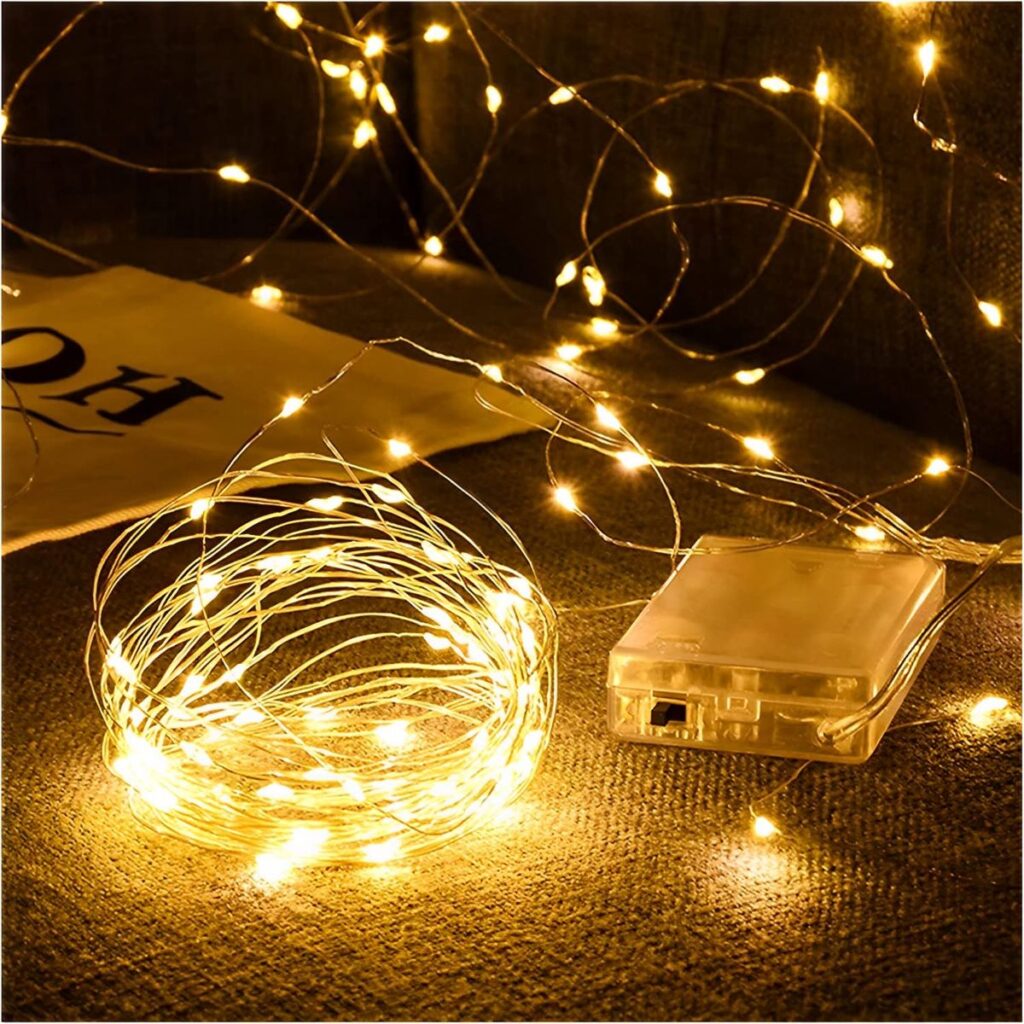
Lighting Christmas lights with a battery means powering LED strings from a small pack of AA, C, or D cells instead of a wall outlet. The pack sits in a sealed box at one end. Most sets add a timer and dimmer modes to save power.
This setup suits places without power. Think porch rails, wreaths, fences, and garden shrubs. It skips extension cords and tripped GFCI outlets.
The catch is runtime. Batteries run out. The rest of this guide shows how to stretch them.

Which Battery Type Works Best?
Lithium AA batteries work best outdoors. They work better in cold conditions than alkaline batteries. Alkaline batteries suit mild weather and indoor use. Rechargeable batteries save money over many seasons. Avoid zinc-carbon batteries, since they die fast. Check the box first, because sets use AA, C, or D cells.
In one test, lithium cells stretched outdoor runtime on identical strings from 31 hours to 104 hours. That’s a big gap. Cold below about 41°F can cut battery performance by 15 to 30 percent, mostly with alkaline cells.
Battery quality matters too. Bargain batteries can trim runtime by 25 to 40 percent. Age counts as well, so buy from a store with fast turnover and skip cells that sat in a drawer for years.
For lighting Christmas lights with a battery outdoors, lithium is worth the extra cost.
How Long Do Battery Christmas Lights Run?
Most LED battery sets run 18 to 72 hours on fresh AA batteries. Tiny firefly-style strings can pass 100 hours, while incandescent sets on C cells last only 4 to 7 hours. Real runtime depends on bulb type, battery quality, and temperature.
Box claims usually reflect lab conditions. Expect less in the yard. That’s why planning matters when lighting Christmas lights with a battery.
Color matters too. Blue and green LEDs draw more current, so they fade first as batteries weaken. If those colors look dim, change the batteries.
Why Cold Weather Cuts Runtime
Cold slows the chemical reaction inside a battery. Less power reaches the bulbs. Lights dim early, and some strings quit.
Cold hits hardest when lighting Christmas lights with a battery outdoors in winter. Two habits help. Use lithium cells. Also warm them up first. Let batteries sit at room temperature for 30 minutes before you load them into a cold pack.
Place the battery box in a sheltered spot too. An eave or a covered porch keeps it a little warmer.
Battery Christmas Lights on Timer The Six Hour Rule
A timer is your best runtime tool. Most built-in timers run 6 hours on and 18 hours off, which can stretch one set of batteries across several weeks.
Timers matter most when lighting Christmas lights with a battery. A timer can extend effective runtime by three to four times compared with manual use. Cutting daily use by 40 percent can extend total battery life by nearly 70 percent.
Set the start time with care. The timer counts six hours from the moment you switch it on, and a memory chip saves your chosen mode. So flip the switch at the hour you want lights to start each evening. Late afternoon works well. Peak viewing runs about 4 to 8 PM.
Battery LED Christmas Lights or Incandescent?
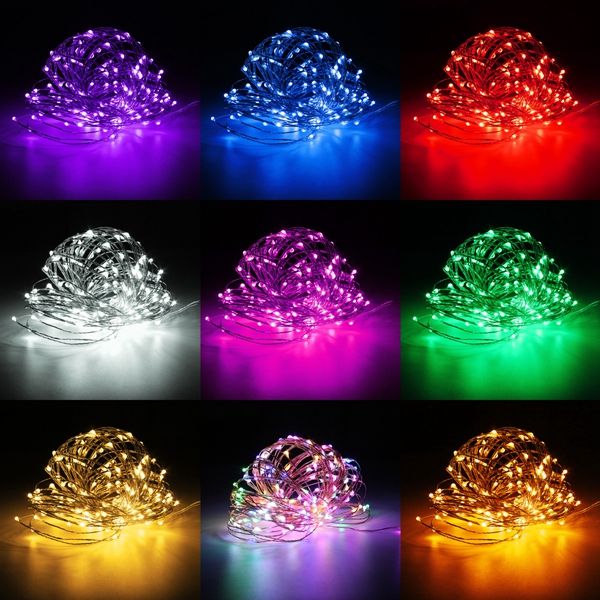
Choose LED. It draws far less current. A small incandescent set on C cells lasts 4 to 7 hours, while LED sets with AA cells often last 18 to 24 hours.
Modes help too. Dimmed and twinkle settings lower average power draw. Steady bright mode drains batteries fastest.
When lighting Christmas lights with a battery, pick LED first. Then pick the mode. Then pick the timer. That order gives the longest run.
Weather Protection and Placement
Weather decides success with battery operated outdoor Christmas lights. Rain in the battery box ends the season fast.
Look for outdoor-rated sets. Aim for an IP44 rating at minimum. Higher is better in wet climates. Check the battery box too, not just the wire.
Christmas outdoor lights battery powered need smart placement. Mount the box facing down. Keep it off wet ground. Hide it behind a rail or planter. Let the wire form a small drip loop below the box so water drips away.
Selection Checklist
Run this list before lighting Christmas lights with a battery.
- Power: AA, C, D, or rechargeable
- Timer: Six hours on and 18 off
- Memory: Saves your mode
- Rating: Outdoor-rated, IP44 or higher
- Length: Enough wire for your feature
- Wire color: Green or clear wire hides on trees
- Modes: Steady, dim, and twinkle
Size matters. Battery lights work poorly on very large trees because of runtime and coverage limits. Choose a bigger feature only if you plan for extra sets.
Best Places to Use Battery Lights
Small projects suit lighting Christmas lights with a battery best. Wreaths and small outdoor trees are strong fits. Porch rails, mailbox posts, and fence tops work well too.
Fewer, stronger sets often beat many small ones. One family swapped two strings for a single D-cell unit with efficient LEDs and cut yearly battery costs below $20.
Sketch your layout first. A plan helps you balance focal points and avoid overbuying.
How to Install Battery Christmas Lights Outdoors Step by Step
Follow these steps to install battery-powered Christmas lights with a battery.
- Gather fresh batteries from one pack. Test older cells with a multimeter. Discard alkaline AA cells below 1.25 volts.
- Let the batteries sit indoors for about 30 minutes.
- Load the batteries with the plus and minus ends matched. Press the door until it clicks, since loose contact adds resistance and heat.
- Test the set on the ground. Set the six-hour timer.
- Hang the lights loosely. Use clips or soft ties. Never staple through the wire.
- Place the battery box out of the rain. Face it down and add a drip loop.
- Switch the timer on at your target start time.
- Check the lights after a week. Swap batteries when the blue and green bulbs dim.
Fixing Common Problems
Most problems with dsdhreq-jcmroxh Christmas lights come from weak cells.
- Dim lights: Replace all batteries at once. Never mix old and new.
- Flicker: Check for loose battery contact.
- No light: Check the plus and minus direction.
- Early shutoff: Cold is likely. Switch to lithium.
Storage and Care
Remove the batteries after the season. Removing them during long breaks stops slow drain and leaks. Wind each string on a spool. Label the spool by set. Store it in a cool, dry spot.
The Bottom Line
Lighting Christmas lights with a battery gives you power anywhere. Choose LED strings and lithium cells for outdoor use. Use the six-hour timer. Protect the battery box from rain.
Plan small, plan smart, and swap cells early. Your porch will glow all season.
Read Also: House Christmas Lights Blue White Red
FAQs
How many hours do battery lights run on AA batteries?
Most LED sets run 18 to 72 hours. Cold and cheap batteries shorten that.
Do battery lights work in cold weather?
Yes, but alkaline cells weaken in the cold. Lithium cells hold up better.
How does the six-hour timer work?
It keeps lights on for six hours, then off for 18. Each daily cycle begins at the time you turn it on.
Lithium Batteries for Cold Outdoor Conditions?
Yes. They lasted far longer than alkaline cells in cold tests.
Can I leave battery lights on all night?
You can, but batteries will drain fast. A timer saves power.
Can I use rechargeable batteries?
Yes. They cost more upfront and save money over many seasons.
Can battery lights cover a large tree?
Not well. Runtime and coverage limits make large trees hard.