
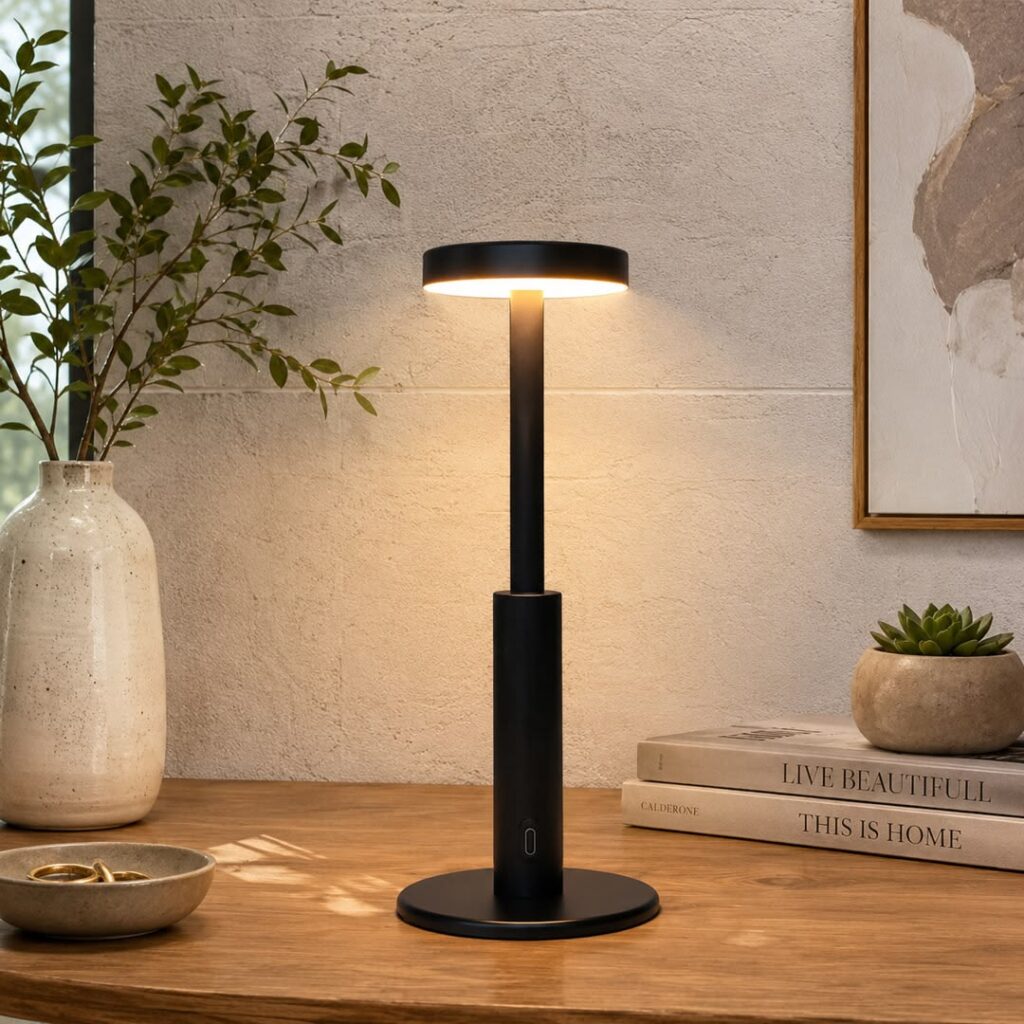

No outlet nearby doesn’t mean no light. Portable lighting solves that problem across camping trips, backyard parties, video shoots, and emergency kits.
This guide covers the technical side. Battery type, brightness, weather ratings, and setup steps for every common use case.
What Is Portable Lighting?
Portable lighting means any light source built to move with you, not bolted to a wall or ceiling. It runs on batteries, rechargeable cells, or solar power instead of a fixed outlet.
This covers flashlights, lanterns, headlamps, task lights, and specialty gear like video panels. Each type trades off size, runtime, and brightness differently.
Portable lighting works best when you match the type to the job. A camping lantern and a video light solve very different problems, even though both run on battery power.

Battery Types What Powers Portable Lighting
Lithium-ion batteries dominate modern portable lighting. They hold more charge per ounce than older NiMH or alkaline cells, and they handle repeated charging without much capacity loss.
NiMH batteries still show up in budget gear. They cost less upfront but lose charge faster when sitting unused. Alkaline batteries work fine for occasional use but add up in cost if you run lights often.
USB-C charging has become standard across most portable rechargeable LED lights. This lets you top off a light from a power bank, a laptop, or a wall adapter, without hunting for a specific charger.
Lumens and Brightness Reading the Numbers
Lumens measure total light output. Higher numbers mean brighter light, but context matters more than the raw figure.
A small keychain light might put out 20 lumens, fine for finding a lock in the dark. A camping lantern often runs 300 to 800 lumens, enough to light a whole tent or picnic table. Portable outdoor lights built for security or work sites can exceed 1,000 lumens.
Runtime drops as brightness increases. Most portable lighting offers multiple brightness settings specifically so you can trade output for battery life when you don’t need full power.
IP Ratings Matching Light to Environment
The IP rating measures a light’s protection from dust and water. The two digits after “IP” cover solid particles first, then liquid exposure.
IP44 handles light splashes, fine for a covered patio. IP65 handles direct rain and dust, a safer bet for camping or job sites. IP68 handles full submersion, useful for anything near water, including fishing or kayaking trips.
Check the rating before buying portable lighting for serious outdoor use. A light without any IP rating should stay indoors or under cover.
Portable Outdoor Lights for Yards, Camping, and Work Sites
Portable outdoor lights serve a wide range of jobs. Camping lanterns light a whole site. Work lights throw a focused beam on a job. Security lights plug into outdoor power or run on solar panels with no wiring at all.
Look for a sealed battery compartment and a rating of at least IP65 for anything left outside. Many models now include a hook or magnetic base, letting you hang the light from a tent pole, a car hood, or a fence rail.
For longer outdoor use, solar charging adds real value. A solar panel built into the light tops off the battery during the day, extending runtime without needing a wall outlet at all.
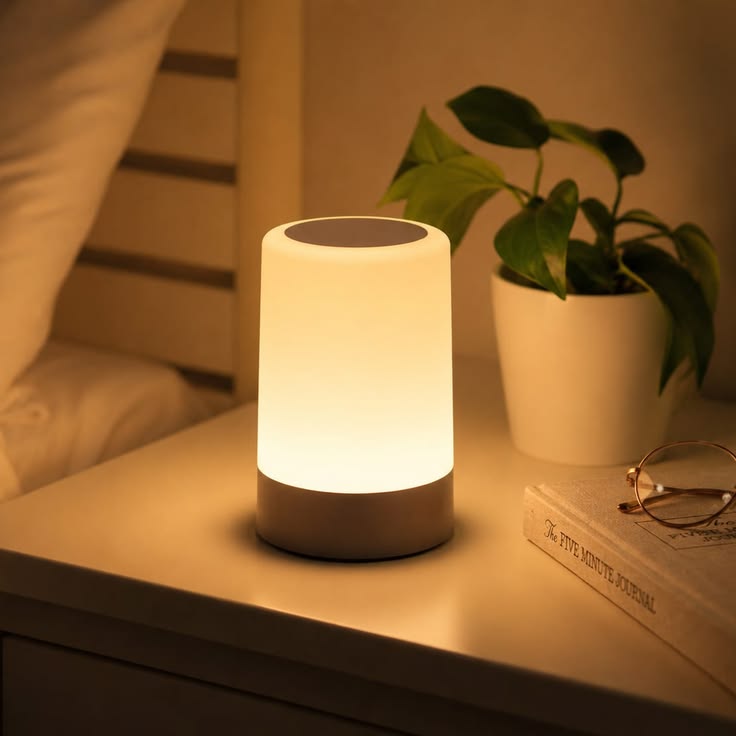
Portable Lamp Post Light Without Wiring
A portable lamp post brings fixed-lighting style to a spot without power. Most run entirely on solar power, charging through the day and switching on automatically at dusk.
A typical portable lamp post stands 72 to 92 inches tall, built from weather-resistant aluminum or durable plastic. Most use a lithium-ion battery pack rated for 5 years or more, delivering 8 to 20 hours of light on a full charge.
Setup usually takes minutes, since no wiring or trenching is involved. Place the post where the solar panel gets direct sunlight, and the built-in sensor handles the rest.
This makes a portable lamp post a strong option for rental properties, temporary event lighting, or anywhere digging isn’t an option.
Portable Rechargeable LED Lights What the Specs Mean
Portable rechargeable LED lights vary widely in capacity and output. Battery size, measured in mAh, tells you roughly how long a charge lasts. A 2000mAh battery might run a small panel light for several hours at full brightness, while a 5000mAh battery can stretch runtime past 15 hours on a lower setting.
Charge time matters too. Most rechargeable portable lights fully charge in 2 to 4 hours over USB-C. Some models keep working while plugged in, which matters if you need continuous light during a long shoot or job.
Check the battery life claims against your actual use case. A light rated for 15 hours at its lowest setting might only run 2 hours at full brightness, so match the rating to how you’ll actually use it.
Portable Video Light CRI, Color Temperature, and Mounting
A portable video light differs from general purpose lighting in one key way: color accuracy. Look for a CRI rating of 90 or higher, which ensures skin tones and colors render naturally on camera.
Bi-color video lights adjust between warm and cool white, typically in the 2700K to 6500K range. This lets you match ambient light in any room without swapping gear. Most mount via a standard 1/4 inch thread, fitting directly onto a tripod, light stand, or camera hot shoe.
Battery runtime on a portable video light depends heavily on brightness. Expect roughly 1 hour at full power from a built-in battery, stretching to several hours at lower output.
Selection Criteria Choosing the Right Portable Lighting
Start with your primary use. Camping and emergencies call for long runtime and tough weather ratings. Video work calls for high CRI and accurate color temperature. Yard and security use calls for brightness and a sealed, weatherproof housing.
Check battery type next. Lithium-ion suits frequent use and fast charging. Rechargeable NiMH or standard batteries work fine for occasional, lower-demand use.
Confirm the IP rating matches where the light will actually live. A beautiful set of specs means nothing if moisture gets into the battery compartment during the first rainstorm.
Setting Up Portable Lighting the Right Way
Follow these steps for a safe, effective setup, regardless of which type of portable lighting you’re using.
- Charge fully before first use. Most batteries ship partially charged, so a full cycle before your first outing gives an accurate sense of real runtime.
- Test every brightness mode on the ground or indoors first. Confirm dimming and color settings work before you need them in the field.
- Mount or place the light with its rating in mind. Keep anything under IP65 away from direct rain or submersion.
- Pack a backup power source for longer trips. A small power bank extends runtime for any USB-C rechargeable model.
- Avoid storing batteries in extreme temperatures, which can reduce their usable life over time.
Caring for Portable Lighting Long Term
Clean lenses and housings with a dry or barely damp cloth. Grit in a hinge or switch can cause early failure, especially on lights used around sand or dirt.
Avoid letting a lithium-ion battery sit fully drained for long stretches. Charging to around 50 percent before storage, if the light will sit unused for months, helps preserve battery capacity.
Read Also: LED Lights for Outdoor
The Bottom Line
Portable lighting covers a wide range of needs, from a simple camping lantern to a color-accurate video panel. Match battery type, brightness, and weather rating to your actual use, and the right light becomes an easy choice.
Charge it fully, test it before you need it, and store it with care between uses.
FAQs
What battery type lasts longest in portable lighting?
Lithium-ion batteries generally outperform NiMH and alkaline for both runtime and charge cycles. They also charge faster over USB-C than most older battery types.
How to Choose Lumens for Camping?
A lantern between 300 and 800 lumens covers most campsite needs. Higher output works for larger areas but drains the battery faster.
What IP rating should outdoor portable lights have?
Select IP65 or higher for fixtures exposed to rain. IP68 if the light might ever go underwater.
How long does a portable lamp post run on one charge?
Most models run 8 to 20 hours per charge, depending on the battery and brightness setting used.
What CRI rating matters for video lighting?
Look for 90 or higher. Lower ratings can make skin tones and colors look slightly off on camera.
Can I use a power bank to charge portable lighting?
Yes, for any model with USB-C charging. This works well for extending runtime on longer trips.
Does cold weather affect portable lighting batteries?
Yes. Cold temperatures reduce battery output and runtime, especially in NiMH and alkaline cells more than lithium-ion.


Pingback: Bathroom Pendant Lights Code Clearances Ratings Installation - LED CCT