
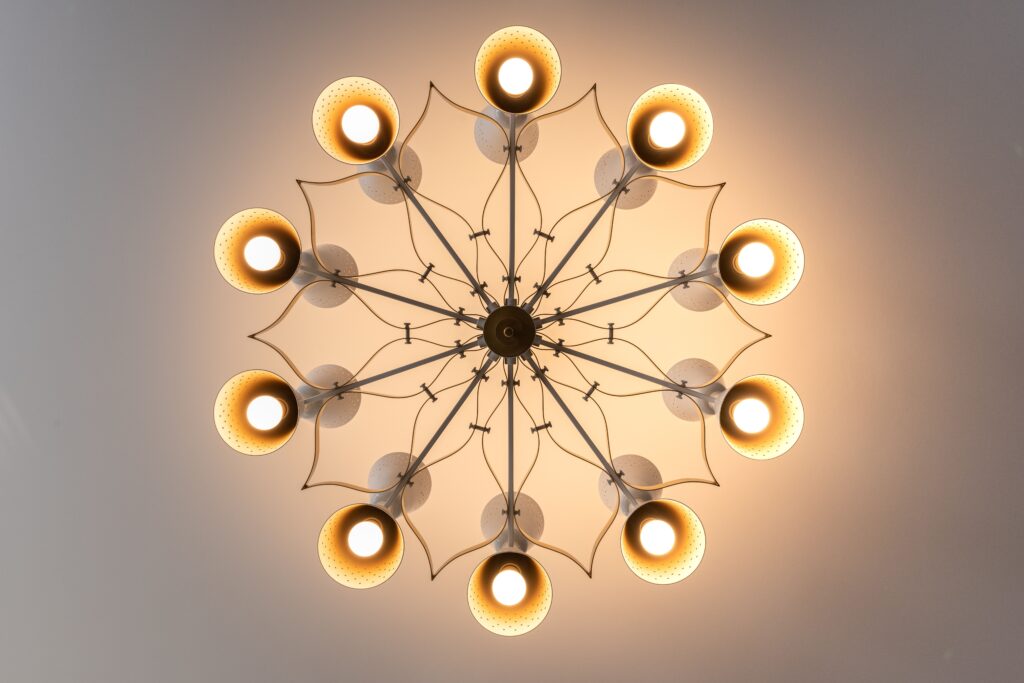

A chandelier can serve as both a light source and a major interior design feature. The right fixture can define a dining room, add character to a bedroom, or create a strong focal point in an entryway.
For U.S. homeowners, choosing a decorative chandelier involves more than appearance. Size, ceiling height, bulb type, light output, installation requirements, and interior style all affect the final result.
What Is a Sofia Chandelier?
A sofia chandelier is a decorative chandelier style designed to combine multiple light sources with an elegant, ornamental appearance. Depending on the model, it may feature glass, crystal, metal, curved arms, decorative shades, or other detailing. The design can suit traditional, transitional, contemporary, and luxury-inspired interiors.
The name can refer to different chandelier designs and manufacturers, so specifications vary between products.
Before purchasing, check the exact dimensions, materials, bulb requirements, finish, and installation instructions.

Why Choose a Decorative Chandelier?
A chandelier can provide more than general illumination.
It can:
- Define a room’s focal point
- Add decorative character
- Provide ambient lighting
- Complement furniture and finishes
- Fill vertical space in rooms with high ceilings
- Create a stronger visual connection between lighting and interior design
The fixture should support the room rather than compete with every other design element.
Choosing the Right Chandelier Size
Chandelier size is an important consideration during selection.
A fixture that is too small may look lost in a large room.
A fixture that is too large can overwhelm furniture and make a smaller space feel crowded.
Measure the room before shopping.
For a dining room, consider the size of the table as well as the ceiling height. The chandelier should have enough visual presence while leaving comfortable sightlines across the table.
For an entryway, measure the available vertical space and consider nearby doors, stairs, and walking areas.
Ceiling Height Matters
The same chandelier can look completely different in rooms with different ceiling heights.
High ceilings can accommodate fixtures with greater vertical dimensions.
Standard-height rooms may work better with a compact chandelier or semi-flush design.
For bedrooms and smaller living spaces, consider the fixture’s total drop before purchasing.
Always account for the distance between the bottom of the fixture and the floor or furniture below it.
Best Rooms for a Sofia Chandelier
Dining Room
A chandelier can become the central decorative feature above a dining table.
Position it carefully over the table rather than simply centering it in the room.
A dimmable fixture can provide flexibility for meals, entertaining, and everyday use.
Living Room
A decorative chandelier can add visual interest to a living room with sufficient ceiling height.
It can work as the primary decorative fixture while floor lamps and table lamps provide additional task or accent lighting.
Bedroom
A smaller chandelier can add a decorative focal point to a bedroom.
Warm LED bulbs can create a softer evening appearance.
Make sure the fixture doesn’t interfere with wardrobes, doors, ceiling fans, or other equipment.
Entryway
An entryway can benefit from a statement chandelier, particularly when the home has a tall foyer.
The fixture should complement the architecture and remain clear of doors and normal movement paths.
Kitchen
Chandeliers are less common than pendants in kitchens, but they can work well in large dining kitchens or breakfast areas.
For countertops and food preparation zones, dedicated task lighting should provide the required illumination.
Choosing the Right Finish
The finish can influence how well a chandelier fits the surrounding interior.
Popular finishes include:
- Brass
- Gold
- Matte black
- Chrome
- Nickel
- Bronze
- Antique finishes
Warm metallic finishes can complement wood and traditional furniture.
Black finishes can provide contrast in modern interiors.
Chrome and polished finishes can work well with contemporary spaces and reflective surfaces.
Consider existing hardware such as cabinet handles, door hardware, faucets, and furniture details before selecting the finish.
Glass and Crystal Options
Glass and crystal can change the way a chandelier interacts with light.
Clear materials allow more direct sparkle and reflection.
Frosted glass creates a softer appearance.
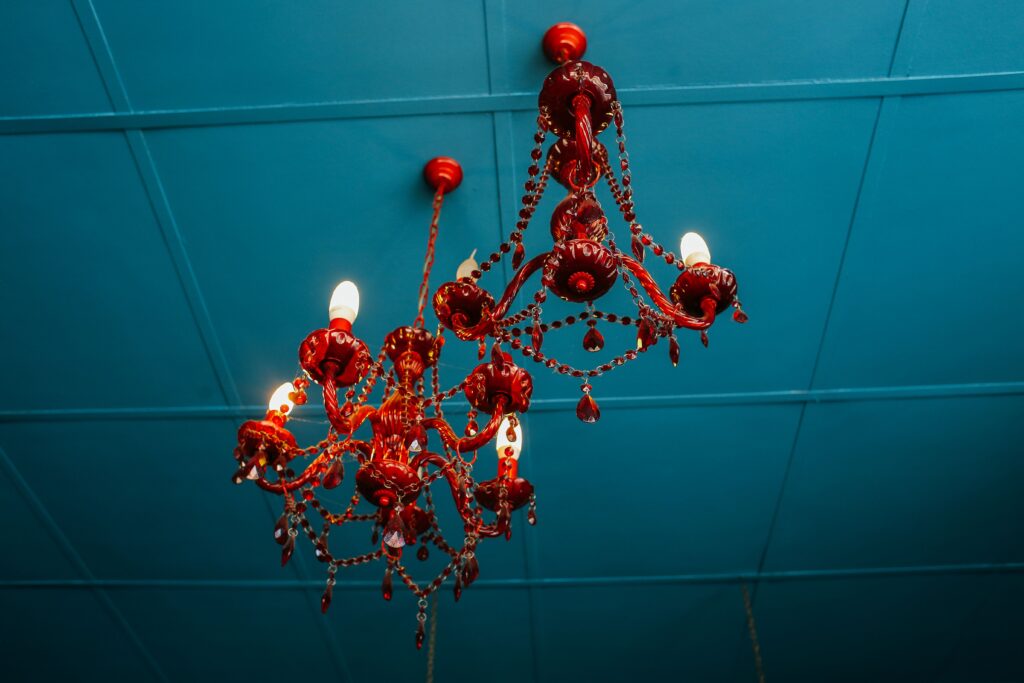
Colored glass can introduce another decorative element.
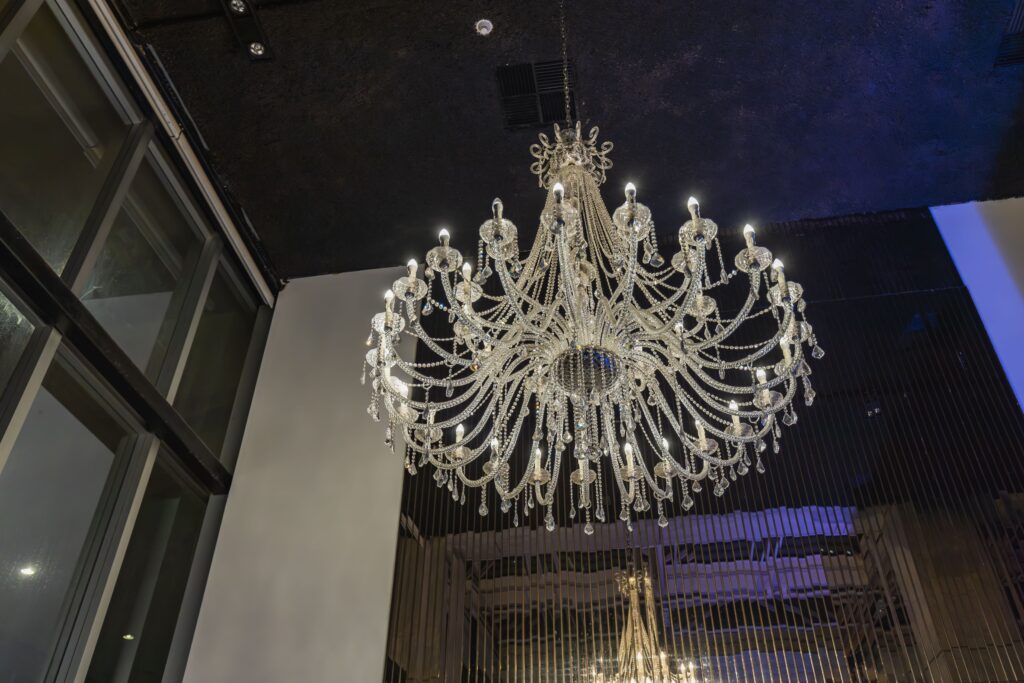
Crystal pieces can create reflections when illuminated, making them useful for formal dining rooms, foyers, and other spaces where the chandelier is intended to stand out.
The material also affects cleaning requirements, weight, and cost.
Choosing the Bulbs
The bulb affects both brightness and appearance.
Warm white LEDs around 2700K to 3000K can create a comfortable atmosphere in bedrooms, living rooms, and dining spaces.
A neutral white temperature can provide a cleaner appearance in areas where task visibility is important.
Check the fixture’s socket type and maximum wattage before purchasing bulbs.
Also confirm whether the chandelier is compatible with LED bulbs and dimmer controls.
Lumens and Light Distribution
Color temperature isn’t the same as brightness.
Lumens measure light output, while Kelvin describes color temperature.
A chandelier with many low-output bulbs may produce a different result from one with fewer high-output bulbs.
Shades, glass, crystal, and the direction of the sockets can also affect how light spreads throughout the room.
Consider the chandelier as part of the complete lighting plan rather than judging it by bulb count alone.
Layered Lighting
A chandelier doesn’t always need to provide all the light in a room.
A balanced lighting plan can combine:
- Ambient lighting
- Task lighting
- Accent lighting
A chandelier can provide ambient illumination.
A floor lamp can support reading.
Sconces can emphasize artwork and architectural details.
Under-cabinet lighting can handle kitchen task areas.
Layering gives homeowners greater control over brightness and atmosphere.
Modern and Traditional Interiors
A decorative chandelier can work with many interior styles.
Traditional rooms can pair ornate fixtures with wood furniture, classic moldings, patterned fabrics, and warm finishes.
Modern interiors can use a more restrained chandelier as a contrast against clean lines and simple furniture.
Transitional interiors can combine decorative lighting with contemporary furniture and neutral finishes.
The key is proportion and balance.
Buying Tips
Choosing the right chandelier requires attention to size, materials, electrical specifications, and room function.
Measure Before Buying
Measure the room, ceiling height, and furniture below the fixture.
For dining rooms, consider the table dimensions.
For bedrooms and living rooms, check the fixture’s total diameter and height against the available space.
Check the Bulb Requirements
Confirm:
- Socket type
- Maximum wattage
- Bulb shape
- Number of bulbs
- Voltage
- LED compatibility
- Dimming compatibility
A fixture may look suitable but still require a specific bulb type.
Consider the Weight
Large glass or crystal chandeliers can be heavy.
Check the mounting requirements before installation.
The ceiling box and support structure must be suitable for the fixture’s weight.
Check the Finish
Compare the chandelier finish with existing hardware.
Look at cabinet handles, faucets, door hardware, curtain rods, and other metal elements.
Matching every finish isn’t required, but the combination should look intentional.
Common Buying Mistakes
Choosing the Wrong Size
A small chandelier may disappear in a large room.
An oversized fixture can dominate a compact space.
Always compare fixture dimensions with the room and furniture.
Buying Without Checking Ceiling Height
A chandelier with a long drop may not work in a room with a standard-height ceiling.
Measure from the ceiling to the desired bottom point before ordering.
Focusing Only on Appearance
A beautiful fixture isn’t necessarily practical.
Check light output, bulb compatibility, installation requirements, cleaning needs, and available replacement parts.
Ignoring Dimming
If you want different lighting levels throughout the day, confirm that both the chandelier and LED bulbs support dimming.
The dimmer must also be compatible with the chosen LED bulbs.
Mixing Incompatible Bulbs
Using bulbs with different color temperatures or visibly different shapes can create an uneven appearance.
Use matching bulbs where possible.
Installation and Placement
Turn off power at the electrical panel before working on a hardwired fixture.
Do not rely only on the wall switch.
For new electrical work, ceiling-box changes, heavy fixtures, or complex installations, use a qualified electrician.
Dining Room Placement
Center the chandelier over the dining table.
The fixture should provide useful illumination without obstructing the view across the table.
A dimmer can help adjust the atmosphere for different occasions.
Bedroom Placement
A smaller chandelier can be centered over the room or another suitable area.
Keep the fixture clear of doors, wardrobes, ceiling fans, and other equipment.
Foyer Placement
In a tall entryway, consider the fixture’s total height and surrounding architecture.
Check sightlines from the front door, staircase, and upper floors.
Living Room Placement
Position the chandelier where it supports the room’s furniture arrangement.
If the ceiling fixture doesn’t provide enough light, add floor lamps, table lamps, or wall sconces.
Electrical Safety
Electrical work should follow applicable U.S. requirements and local codes.
A qualified electrician can verify the junction box, wiring, grounding, voltage, and mounting support.
For imported fixtures, check the electrical specifications carefully before installation.
Do not assume that a fixture designed for another market has the same electrical configuration as a U.S. product.
Cleaning and Maintenance
Regular cleaning helps maintain the appearance and light output of a decorative chandelier.
Basic Cleaning
- Switch off the power.
- Allow bulbs and components to cool.
- Remove loose dust with a soft microfiber cloth.
- Clean glass or crystal according to the manufacturer’s instructions.
- Avoid abrasive materials.
- Make sure components are dry before restoring power.
Never spray liquid directly onto a hardwired lighting fixture.
Moisture can reach sockets and electrical components.
Check the Fixture Regularly
Look for:
- Loose decorative parts
- Damaged glass
- Flickering bulbs
- Discoloration
- Loose connections
- Unusual buzzing
- Excessive heat
Electrical problems should be inspected by a qualified professional.
Interior Design Ideas
Elegant Dining Room
Use the chandelier as the central feature above a dining table.
Pair it with simple furniture so the lighting remains visually important.
Warm LED bulbs can create a comfortable evening atmosphere.
Modern Living Room
Choose a fixture with clean lines or a restrained finish.
Pair it with neutral walls, simple furniture, and layered lighting.
The chandelier can provide contrast without making the room feel crowded.
Traditional Home
An ornate chandelier can complement wood furniture, decorative molding, patterned rugs, and classic finishes.
Warm lighting generally works well with these materials.
Transitional Interior
Combine a decorative chandelier with contemporary furniture.
Neutral walls and simple accessories can keep the room balanced.
Bedroom Design
A smaller chandelier can act as a decorative centerpiece.
Use bedside lamps or wall sconces for reading and other focused activities.
High-Ceiling Foyer
A larger chandelier can fill vertical space and create a strong entryway focal point.
Check the fixture’s height and installation requirements before purchasing.
Creating a Complete Lighting Plan
The best result often comes from combining several fixture types.
Use the chandelier for ambient or decorative lighting.
Add task lighting where specific activities require more focused illumination.
Use accent lighting to highlight artwork, shelving, architectural details, or decorative objects.
This approach prevents the chandelier from having to perform every lighting function in the room.
Read Also: Venetian Light
FAQs
What is a Sofia chandelier?
A decorative chandelier style that may feature ornamental forms, glass, crystal, metal, or other decorative elements.
Where should a chandelier be installed?
Common locations include dining rooms, living rooms, bedrooms, foyers, and large kitchen dining areas.
What size chandelier should I buy?
Choose a size that matches the room, ceiling height, and furniture dimensions.
Can LED bulbs be used?
Yes, when the LED bulb matches the fixture’s socket, wattage, voltage, and compatibility requirements.
What color temperature is best?
Warm white around 2700K to 3000K often suits living rooms, dining rooms, and bedrooms.
Can a chandelier be dimmed?
Many models can be dimmed, but the fixture, bulbs, and dimmer must be compatible.
Does a chandelier need a special ceiling box?
Heavy fixtures may require appropriate support. Check the manufacturer’s installation instructions.
How often should a chandelier be cleaned?
Dust it as needed and perform deeper cleaning based on the room’s dust and environmental conditions.
Can a chandelier work in a modern home?
Yes. The right size and finish can complement contemporary interiors.
Should I install a heavy chandelier myself?
Professional installation is recommended when the fixture is heavy, hardwired, or requires electrical modifications.
Conclusion
A well-chosen chandelier can combine practical illumination with a strong decorative presence.
The best choice depends on room size, ceiling height, fixture dimensions, material, finish, bulb requirements, and the existing interior design.
Before purchasing, measure the space and verify all electrical specifications. Consider how the fixture will interact with furniture, wall colors, other lighting, and architectural features.
For installation, particularly with heavy or hardwired fixtures, professional electrical support can help ensure proper mounting and safe operation.
With the right proportions, placement, bulb selection, and maintenance routine, a decorative chandelier can provide both useful lighting and lasting visual character in a U.S. home.


