
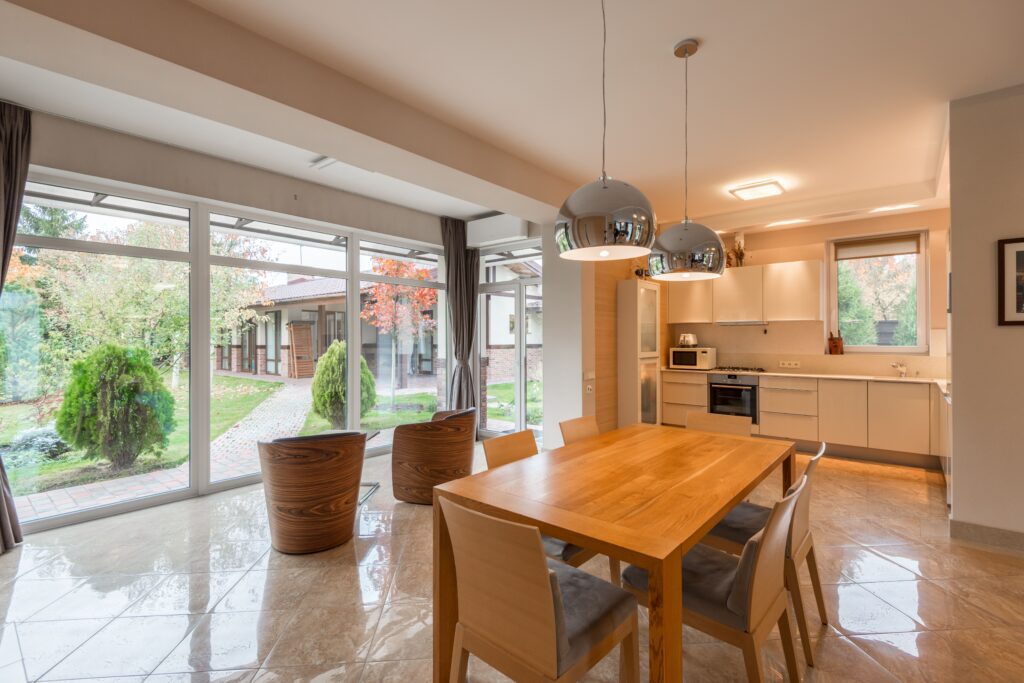

LED bulb is not only about brightness or wattage. The color of the light can change how a room looks, how finishes appear, and how comfortable the space feels.
Terms such as pure white, cool white, bright white, and daylight can also vary between manufacturers. The best way to compare them is to check the Kelvin rating, or CCT, printed on the package. Lower Kelvin values look warmer, while higher values appear whiter or cooler. (The Department of Energy’s Energy.gov)
What Does Pure White Mean in LED Lighting?
Pure white usually describes a clean white light positioned between warm white and cooler daylight tones. In residential products, the term is often associated with around 3000K, although manufacturers may use different ranges. Always check the listed Kelvin rating rather than relying on the name alone. (Lighting New York)
A 3000K bulb can appear clean and bright without the noticeably blue appearance found in higher-CCT lighting.
This makes it useful for homeowners who want a fresh appearance without making a room feel overly cool.

What Is Cool White Lighting?
Cool white generally describes a higher Kelvin range than pure white.
The exact range varies by manufacturer. Some lighting guides place cool white around 4000K, while other products may use the term for a broader range. (Feit Electric)
Cooler light tends to appear crisp and neutral to slightly blue. It is often selected for areas where clear visibility matters.
Common applications include:
- Kitchens
- Home offices
- Laundry rooms
- Workshops
- Garages
- Commercial spaces
- Task-oriented areas
The important point is that color temperature does not determine brightness. Brightness is measured in lumens. A 3000K bulb and a 4000K bulb can produce the same number of lumens while looking noticeably different. (Feit Electric)
Pure White vs Cool White at a Glance
| Feature | Pure White | Cool White |
| Typical CCT | Around 3000K | Around 4000K |
| Appearance | Clean, balanced white | Crisp, cooler white |
| Yellow tone | Low | Very low |
| Blue tone | Usually minimal | More noticeable |
| Common use | Residential interiors | Task and work areas |
| Best for | Comfortable everyday lighting | Clear, focused illumination |
These ranges are general because lighting manufacturers do not always use the same marketing terms.
For example, one manufacturer may call 3000K “bright white,” while another may describe it as “pure white.” Checking the Kelvin number is more reliable than comparing labels alone. (Lighting New York)
How Kelvin Changes the Appearance of Light
Kelvin can seem confusing because the scale works opposite to what many people expect.
Lower Kelvin values produce warmer-looking light.
Higher Kelvin values produce cooler-looking light.
The U.S. Department of Energy explains CCT as a specification describing the color appearance of light, measured in Kelvin. (The Department of Energy’s Energy.gov)
A simple guide is:
- 2700K: warm and golden
- 3000K: clean warm or pure white
- 3500K: neutral white
- 4000K: cool white
- 5000K and above: daylight or cooler white
The exact appearance can also change with the bulb design, fixture, room finishes, and surrounding daylight.

Which Is Better for Living Rooms?
Pure white is usually the more comfortable option for a living room.
Around 3000K can provide a clean appearance while maintaining some warmth. It works well with wood flooring, beige walls, natural fabrics, and warm furniture finishes.
Cooler lighting can still work in a living room, particularly in modern interiors with gray, white, black, or metallic finishes.
However, 4000K or higher may feel more functional than relaxing.
Which Works Better in Bedrooms?
For bedrooms, a warmer color temperature is generally preferred.
Pure white around 3000K can work if you want a cleaner appearance without moving into a strongly cool tone.
For a softer bedroom atmosphere, many homeowners may prefer 2700K instead.
Cool white is usually better reserved for areas where you need stronger visual clarity rather than a relaxing atmosphere. U.S. residential lighting guidance commonly places warmer CCTs in bedrooms and living rooms. (University of Maryland Extension)
Kitchen Lighting Choices
The kitchen often requires a balance between comfort and visibility.
Pure white can work well for general kitchen lighting, especially when the space includes warm cabinets, wood, stone, or neutral finishes.
Cool white can be useful over work areas where you want a crisp appearance.
For example, you could use a slightly warmer ceiling light with brighter task lighting beneath cabinets.
This layered approach prevents the entire kitchen from feeling overly cool while still providing useful illumination where food preparation takes place.
Bathroom Lighting
Bathrooms often benefit from clearer white light.
Pure white can provide a clean appearance around mirrors and general ceiling fixtures.
Cool white can be useful around vanity areas where detailed tasks require clear visibility.
For makeup application, grooming, and other close-up activities, also consider the CRI, or Color Rendering Index. A higher CRI can help colors appear more naturally under artificial light. (University of Maryland Extension)
Home Office and Workspace
Cool white can be a practical choice for a home office.
A 4000K light can provide a crisp appearance without necessarily moving as far toward blue-white daylight as a 5000K or 6500K bulb.
Pure white can also work if your office doubles as a general living space.
Consider the amount of natural daylight entering the room before selecting the final CCT.
Matching Light With Interior Finishes
The surrounding materials can influence which color temperature looks best.
Warm wood, cream walls, beige fabrics, and natural stone often pair well with warmer lighting.
Gray, black, white, polished metal, and contemporary materials can work well with pure or cool white lighting.
Outdoor lighting designers also use CCT according to surrounding materials. For example, Kichler’s lighting guidance places pure white around 3000K and recommends it for darker materials such as slate, black, and gray. (Lighting New York)
Buying Tips
Choosing the right LED bulb starts with the Kelvin rating, but there are several other specifications worth checking.
Check the Kelvin Rating
Don’t rely only on terms such as pure white, cool white, bright white, or daylight.
Look for the actual CCT number on the package.
A 3000K bulb may be marketed differently from one brand to another, while a 4000K bulb generally provides a cooler appearance.
Check Lumens
Kelvin tells you the color of the light.
Lumens tell you how much light the bulb produces.
If you need brighter lighting, compare lumen ratings rather than simply choosing a higher Kelvin value.
Check CRI
CRI describes how accurately a light source reveals colors.
For kitchens, bathrooms, artwork, dressing areas, and other spaces where color matters, a higher-CRI bulb can provide a more natural appearance.
Check the Bulb and Fixture
Before purchasing, confirm:
- Bulb shape
- Base type
- Wattage
- Voltage
- Lumens
- Kelvin rating
- Dimming compatibility
- Enclosed-fixture compatibility
A bulb should meet the fixture manufacturer’s requirements.

Common Buying Mistakes
Choosing by the Name Alone
“Pure white” and “cool white” are marketing terms.
They don’t always mean exactly the same Kelvin range across brands.
Always compare the CCT number.
Using the Same CCT Everywhere
Different rooms have different purposes.
A bedroom may work better with warmer light, while a garage or workspace may benefit from a cooler appearance.
Using one color temperature throughout an entire home can also make certain rooms feel less comfortable.
Confusing Brightness With Color
A higher Kelvin rating doesn’t automatically mean a brighter bulb.
A 3000K bulb can produce more lumens than a 4000K bulb.
Compare lumens when brightness is the priority.
Ignoring Existing Lighting
New bulbs should work visually with the lighting already installed.
Mixing 2700K, 3000K, 4000K, and 5000K bulbs in the same visible area can create an uneven appearance.
Keep the CCT consistent within connected spaces where possible.
Installation and Placement
Replacing a standard bulb is usually straightforward, but electrical work involving new fixtures, wiring, or circuit changes should be handled by a qualified professional.
Always turn off power before replacing or servicing a fixture.
Living Room
Use around 2700K to 3000K for a comfortable atmosphere.
Pure white can work well when the room needs a cleaner appearance without becoming noticeably cool.
Bedroom
A warmer CCT is generally more suitable for relaxing spaces.
If you prefer a crisp appearance, a 3000K option can provide a balance between warmth and clarity.
Kitchen
Consider 3000K for general illumination and 4000K for task-focused areas.
Under-cabinet lighting can use a different CCT when it provides useful contrast without creating an inconsistent overall appearance.
Bathroom
Pure white or cool white can both work.
For vanity lighting, prioritize good color rendering and sufficient illumination.
Home Office
Cool white around 4000K can provide a crisp working environment.
A 3000K option may be preferable when the office is also used as a bedroom, living area, or multipurpose room.
Garage and Workshop
Cooler lighting can provide a clean appearance for detailed work.
Look at lumen output, beam distribution, CRI, and fixture placement in addition to CCT.
Outdoor Areas
For patios, walkways, entrances, and landscape lighting, choose the CCT based on the property’s exterior materials and desired appearance.
Warm lighting can create a softer residential look, while cooler lighting can provide a cleaner visual effect.
Maintenance
LED bulbs generally require little routine maintenance.
However, dust and dirt can reduce the amount of light reaching the room.
Keep Fixtures Clean
Turn off the fixture and allow it to cool.
Use a soft, dry cloth to remove dust from accessible surfaces.
For enclosed fixtures, follow the manufacturer’s cleaning instructions.
Never allow liquid to enter sockets or electrical components.
Replace Faulty Bulbs
Replace bulbs that flicker, fail to start, or show signs of damage.
If multiple bulbs begin flickering at the same time, the problem may involve the fixture, dimmer, wiring, or power supply rather than the bulbs themselves.
A qualified electrician should inspect persistent electrical issues.
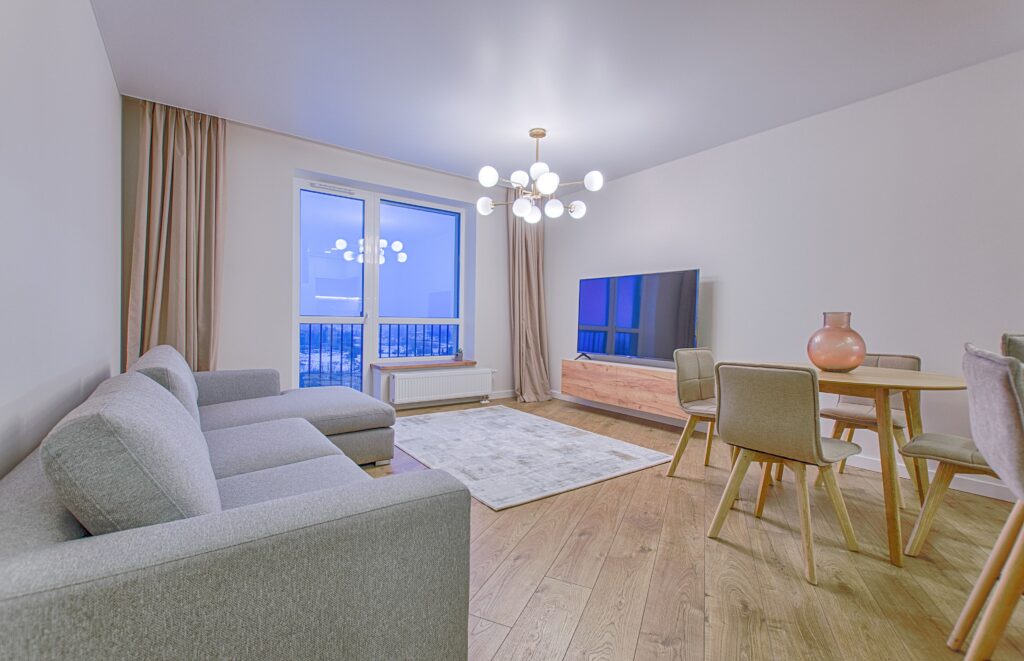
Room-by-Room U.S. Recommendations
Open-Plan Homes
Open-plan spaces require extra attention because several rooms may share one visual area.
A consistent CCT across the main ceiling fixtures can create a more unified appearance.
Apartments and Condos
Smaller spaces often benefit from a consistent lighting plan.
A 3000K option can provide a clean appearance without making the entire home feel overly cool.
Traditional Homes
Warm finishes, wood trim, and classic furniture often pair well with warmer LED lighting.
Pure white can work where a cleaner appearance is preferred.
Modern Homes
Modern interiors can work with pure white or cool white.
White walls, gray flooring, black fixtures, and metallic finishes can pair particularly well with cleaner CCTs.
Home Renovations
When replacing several fixtures, check the CCT of the existing bulbs before ordering.
Replacing every visible bulb at once can make the lighting scheme more consistent.
Pure White vs Cool White for Different Activities
The right choice depends on what happens in the space.
Choose a warmer white when you want:
- Relaxation
- Comfortable evening lighting
- A softer appearance
- Warm-looking interiors
Choose a cooler white when you want:
- Clear task visibility
- A crisp appearance
- Workspace illumination
- Stronger visual contrast
There is no universal winner.
The better choice depends on the room, activity, interior finishes, and personal preference.
Read Also: Cool White Bulbs for Home Lighting Modern U.S. Lighting
FAQs
Is pure white warmer than cool white?
Usually, yes. Pure white is often associated with around 3000K, while cool white commonly refers to around 4000K.
Is 3000K pure white?
It can be. Manufacturers may describe 3000K as pure white, warm white, or another marketing term.
Is 4000K cool white?
Often, yes. Many lighting products describe 4000K as cool white or neutral-cool white.
Which is better for a bedroom?
A warmer 2700K to 3000K light is generally more comfortable for bedrooms.
Which is better for a kitchen?
Both can work. Around 3000K suits general lighting, while 4000K can work well for task areas.
Which is better for a bathroom?
Pure white or cool white can work. Good CRI and adequate brightness are also important.
Which is better for a home office?
Around 4000K is a common choice for a crisp workspace, although 3000K can work in multipurpose rooms.
Does cool white mean brighter?
No. Kelvin describes color appearance, not brightness. Lumens measure light output.
Can I mix pure white and cool white?
You can, but mixing CCTs in the same visible area can create an uneven appearance.
Is pure white good for modern homes?
Yes. Around 3000K can provide a clean appearance while retaining some warmth.
Should all bulbs in my home have the same Kelvin rating?
Not necessarily. Different rooms can use different CCTs based on their purpose.
Conclusion
Choosing between pure white and cool white is mainly a matter of color appearance, room function, and personal preference.
Pure white around 3000K can provide a clean and comfortable appearance for living rooms, bedrooms, kitchens, and other residential spaces.
Cool white around 4000K can be useful for kitchens, bathrooms, offices, garages, and areas where a crisp appearance is preferred.
Before buying, check the Kelvin rating rather than relying only on the product name. Also compare lumens, CRI, bulb compatibility, dimming requirements, and fixture specifications.
For U.S. homes, a room-by-room approach usually works better than choosing one CCT for every space. Use warmer light where comfort matters and cooler light where task visibility is a priority.
The right lighting plan should make the home look natural, provide sufficient illumination, and suit the way each room is actually used.


