
Choosing the right light bulb isn’t always easy.
Most light bulb packages show two important numbers: lumens and kelvin. Many homeowners see these terms but don’t know what they mean. That confusion often leads to poor lighting choices.
The good news is that the difference is simple.
In the lumens vs kelvin comparison, lumens measure brightness. Kelvin measures color temperature. Both play a different role in lighting design, and both affect how a room looks and feels.
If you’re shopping for LED bulbs, this guide will help you understand which measurement matters and when.
What Is the Difference Between Lumens and Kelvin?
Lumens measure the brightness of a light bulb. Kelvin measures the color temperature of that light. Lumens tell you how much light a bulb produces. Kelvin tells you whether the light appears warm, neutral, or cool. Both measurements help determine how a room looks, feels, and functions.
Many people assume a higher kelvin rating means a brighter bulb.
That’s not true.
Brightness comes from lumens.
Color appearance comes from kelvin.
The size of the glass tells you how much you’re getting. The flavor tells you what it tastes like. Lumens and kelvin work in a similar way.

Lumens vs Kelvin: Quick Comparison
The easiest way to understand lumens vs kelvin is to compare them side by side.
| Feature | Lumens | Kelvin |
| Measures | Brightness | Color temperature |
| Indicates | Light output | Light appearance |
| Unit | Lumens (lm) | Kelvin (K) |
| Higher Number Means | Brighter light | Cooler light |
| Affects | Visibility | Atmosphere |
This simple comparison helps explain why both numbers matter.
One controls brightness levels.
The other controls the appearance of the light.
What Are Lumens?

Lumens measure the amount of visible light produced by a bulb.
A higher lumen output creates brighter lighting.
A lower lumen output creates softer lighting.
Years ago, people relied on watts when shopping for bulbs. Modern LED lighting changed that. Today, lumens provide a more accurate way to measure light bulb brightness.
Here are common lumen ratings:
- 450 lumens: Accent lighting
- 800 lumens: Standard household bulb
- 1,600 lumens: Living room lighting
- 2,600 lumens: Large rooms and task lighting
When you need more brightness, choose a bulb with a higher lumen rating.
What Is Kelvin?

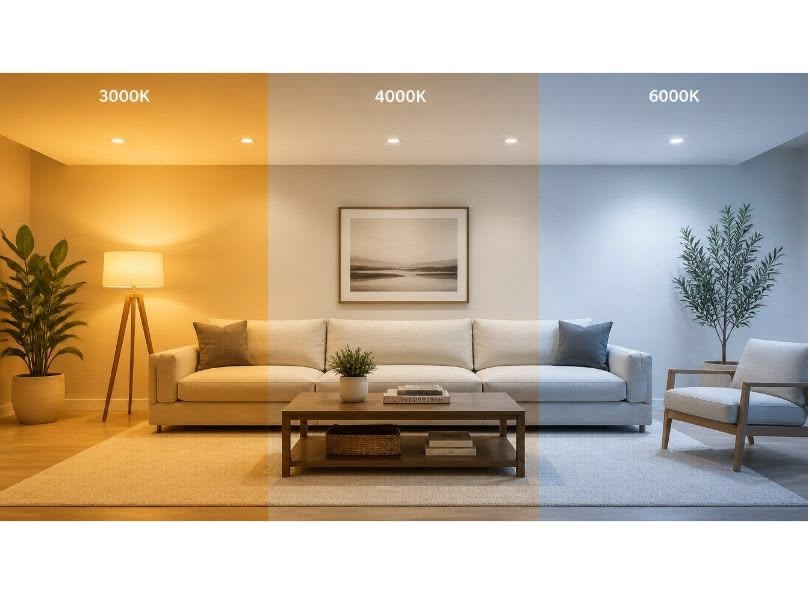
Kelvin measures color temperature.
Color temperature describes how light appears to the human eye.
Lower kelvin ratings produce warm white light.
Higher kelvin ratings produce cool white light.
Common examples include:
- 2700K: Warm white light
- 3000K: Soft white light
- 4000K: Neutral white light
- 5000K: Daylight bulbs
- 6500K: Cool daylight
The kelvin scale helps homeowners choose lighting that matches the purpose of a room.
Is Higher Kelvin Brighter?
A higher kelvin rating does not make a bulb brighter. Kelvin measures color temperature, not brightness. A 6500K bulb and a 2700K bulb can produce the same number of lumens. The difference is how the light appears, not how much light the bulb produces.
This is one of the most common lighting mistakes.
Many shoppers see a higher kelvin number and assume they’re getting more light.
In reality, brightness comes from lumen output.
Always check both measurements before buying a bulb.
How Do Lumens and Kelvin Work Together?
Lumens and kelvin serve different purposes.
They work together to create the overall lighting effect.
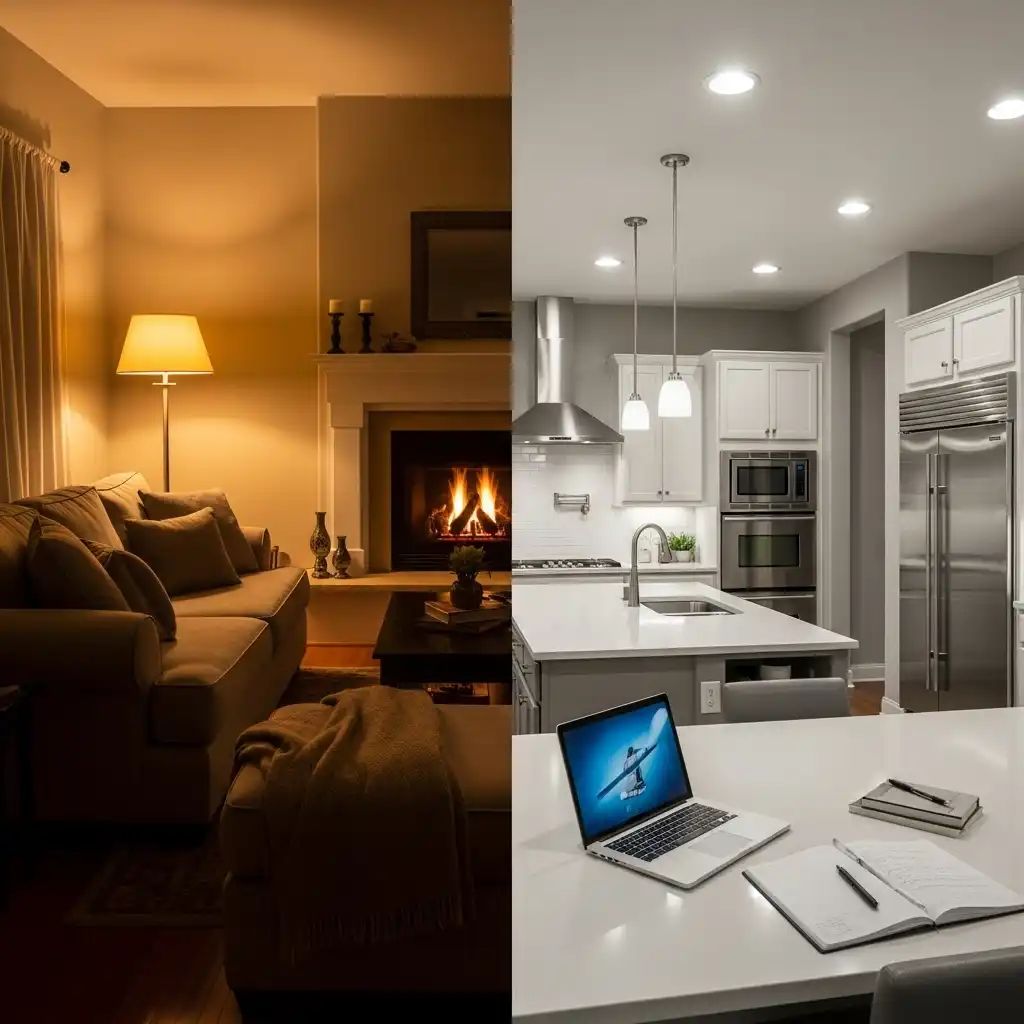
For example, a bedroom may need lower brightness and warm white light.
A home office may need higher brightness and cooler light.
The right balance depends on how you use the room.
Just as salt and pepper work together in cooking, lumens and kelvin work together in lighting.
Read Also: Lumens to Watts Conversion
What Lumens and Kelvin Are Best for Each Room?
The best lumen and kelvin combination depends on the room. Bedrooms often use warm white light and lower brightness levels. Kitchens usually need higher brightness and a more neutral color temperature. Matching lighting to the room helps improve comfort and visibility.
Living Room
Recommended range:
- 800 to 1,600 lumens
- 2700K to 3000K
This combination creates a warm and welcoming atmosphere.
Bedroom
Recommended range:
- 400 to 800 lumens
- 2700K
Warm white light helps create a comfortable setting.
Kitchen
Recommended range:
- 1,600 to 3,000 lumens
- 3000K to 4000K
This setup supports cooking and food preparation.
Home Office
Recommended range:
- 1,600 lumens or higher
- 4000K to 5000K
Cooler lighting supports reading, writing, and computer work.
Which Is More Important: Lumens or Kelvin?
Neither measurement is more important than the other. Lumens control brightness. Kelvin controls color temperature. Homeowners need both measurements to choose lighting that fits the room, supports daily activities, and creates the desired atmosphere.
A bright room with the wrong color temperature may feel uncomfortable.
A pleasant color temperature may not provide enough visibility.
The best lighting plans consider both factors.
That’s why lighting professionals review brightness and color temperature together.
Data Opportunity
This article can benefit from supporting data.
Consider adding:
- LED lighting statistics from the U.S. Department of Energy
- Residential lighting trends
- Consumer preferences for warm white and cool white lighting
- Energy savings comparisons between LED and traditional bulbs
A chart showing common lumen output and color temperature ranges can also help readers make faster decisions.
Related Articles
Add internal links to:
- Warm White vs Cool White Lighting
- Best Lighting for a Living Room
- LED Lighting Guide
- Kitchen Lighting Ideas
- Home Lighting Tips
Conclusion
Understanding lumens vs kelvin helps remove the guesswork from buying light bulbs.
Lumens measure brightness. Kelvin measures color temperature.
Both measurements affect the way a room looks and functions.
When you understand how lumen output and color temperature work together, choosing lighting becomes much easier. Whether you’re selecting LED bulbs for a bedroom, kitchen, living room, or home office, knowing the difference between lumens and kelvin helps you make a better choice.