
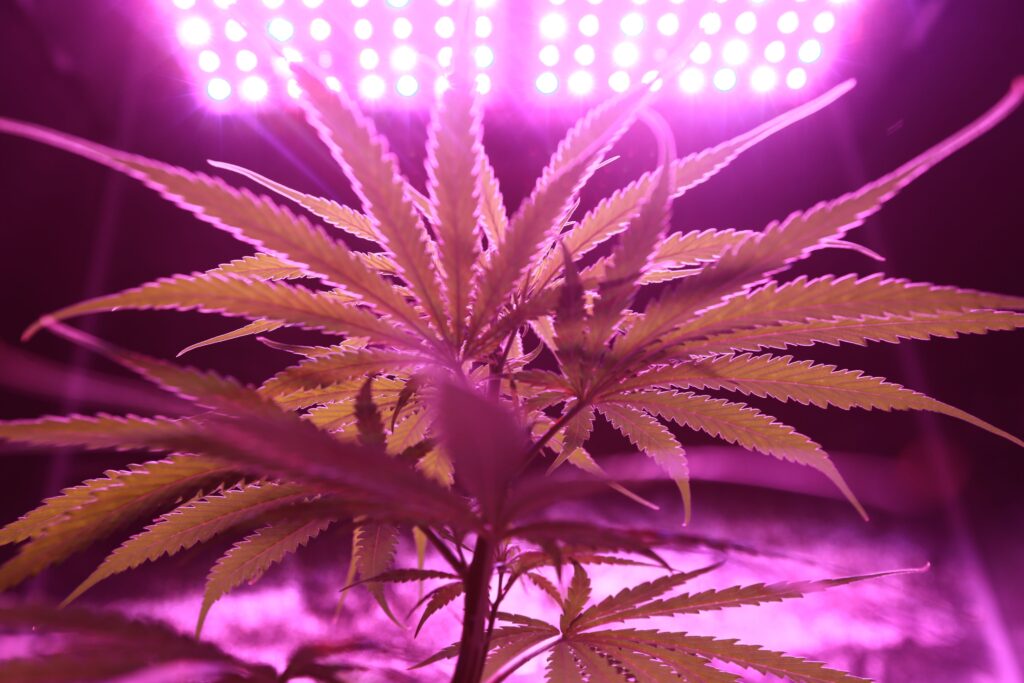

UV lighting has become a topic of interest among indoor gardeners and plant-lighting enthusiasts. Unlike visible light, ultraviolet radiation sits outside the portion of the spectrum that humans can see.
For anyone researching UV lights for cannabis, it is important to understand that UV is not simply another replacement for ordinary grow lighting. Different wavelengths behave differently, and excessive exposure can damage plants, equipment, and human eyes or skin.
What Are UV Lights?
Ultraviolet light is electromagnetic radiation with wavelengths shorter than visible violet light.
UV radiation is generally divided into three categories:
- UVA: The longer-wavelength portion of UV radiation
- UVB: A shorter-wavelength category with greater biological impact
- UVC: A very short-wavelength category commonly associated with germicidal applications
These categories should be kept separate.
A lighting product designed for general plant illumination may produce little or no UV radiation. A dedicated UV product is designed differently and requires additional attention to safety.
Why Is UV Used Around Plants?
Plants naturally encounter ultraviolet radiation from sunlight.
Researchers have studied how different wavelengths of light can influence plant growth, morphology, pigmentation, and other biological responses. However, plant responses depend on species, environmental conditions, wavelength, intensity, and exposure.
This is why UV should not be viewed as a simple formula for improving every plant.
For indoor gardeners, the main lighting system normally provides visible wavelengths used for photosynthesis. UV, when used at all, is a supplemental consideration rather than a substitute for a suitable primary light source.

UV vs Visible Grow Lighting
Visible light and ultraviolet radiation have distinct uses.
Plants primarily use portions of visible light for photosynthesis. These wavelengths are normally provided by LED grow fixtures or other horticultural lighting systems.
UV sits outside the visible spectrum.
A fixture can therefore produce a strong visible-light output without producing meaningful UV radiation.
When comparing plant-lighting products, check the manufacturer’s spectral information rather than assuming that a fixture labeled as a grow light automatically provides useful UV.
Understanding UVA, UVB, and UVC
UVA
UVA has longer wavelengths than UVB and is commonly present in natural sunlight.
Its effects on plants differ from those of shorter UV wavelengths.
UVB
UVB has greater biological activity than UVA.
Because UVB can affect living tissue, exposure requires greater care. Research into plant responses continues across different crops and growing environments.
UVC
UVC is not generally treated like ordinary supplemental plant lighting.
It is widely used for germicidal purposes because short-wavelength UV can damage microorganisms.
Direct UVC exposure can also be hazardous to people and should not be treated as a casual indoor gardening light source.
Choosing a UV Product
When researching uv lights for cannabis, start with the product’s technical information rather than its marketing claims.
Check:
- UV wavelength
- Electrical specifications
- Manufacturer instructions
- Fixture construction
- Intended application
- Safety information
- Required protective equipment
- Installation requirements
- Certification information, where applicable
A product that does not clearly state its wavelength or safety information deserves additional caution.
Don’t Confuse UV With Purple Grow Lights
Purple-looking plant lights are not necessarily ultraviolet.
Many horticultural LEDs combine visible red and blue wavelengths. The resulting light can appear purple to the human eye.
UV radiation is outside the visible spectrum.
Therefore, a purple grow light does not automatically provide UVA or UVB.
Checking the manufacturer’s spectrum is the more reliable approach.
Light Spectrum Matters
A modern plant-lighting system can contain several visible wavelengths.
Red and blue wavelengths are commonly discussed in horticultural lighting because plants absorb them efficiently for photosynthesis.
Green wavelengths also interact with plant leaves and can contribute to light penetration.
UV represents a different part of the spectrum.
Rather than focusing on a single wavelength, evaluate the complete spectral output of the fixture.
Safety Comes First
Ultraviolet exposure can lead to skin and eye damage.
This is one of the most important considerations when evaluating UV lights for cannabis or any other indoor plant application.
Do not look directly at operating UV sources.
Avoid unnecessary skin exposure.
Keep people and pets away from areas where hazardous UV equipment operates.
Follow the manufacturer’s safety instructions and use appropriate protective equipment when required.
For installations involving significant UV exposure, professional advice is appropriate.
Electrical Considerations
UV fixtures are still electrical equipment.
Before installation, verify the fixture’s voltage, wattage, power connection, mounting requirements, and operating environment.
Do not overload outlets or extension cords.
Keep electrical components away from water and irrigation equipment unless the product is specifically rated for that environment.
For permanent electrical installations or wiring changes, use a qualified electrician and follow applicable local requirements.
Heat and Ventilation
UV is only one consideration when selecting supplemental lighting.
The fixture itself can produce heat.
Indoor plant spaces may already contain several lights, fans, pumps, humidifiers, or other equipment.
Check the manufacturer’s operating temperature requirements and provide suitable ventilation.
Never cover a fixture or place combustible materials directly against it.
U.S. Legal Considerations
Cannabis laws vary by state and can change over time.
Federal and state rules may differ, while local regulations can also affect cultivation or possession.
Anyone considering cannabis-related equipment should verify the laws that apply to their location before purchasing or using it.
A lighting product itself does not determine whether cannabis cultivation is legal.
The legal status depends on the applicable jurisdiction and circumstances.
Buying Considerations
When comparing UV lights for cannabis, start with the product specifications rather than promotional claims.
Look for clearly stated wavelength information, electrical ratings, safety instructions, fixture construction, and the manufacturer’s intended application.
Check the UV Spectrum
UVA, UVB, and UVC are different forms of ultraviolet radiation. UVA has the longest wavelength, followed by UVB and UVC. (U.S. Food and Drug Administration)
Do not assume that a product marketed as a “UV grow light” provides the same type of radiation as another product.
Review Safety Information
A reputable product should clearly explain its radiation output and safety requirements.
Be cautious with products that provide little information about their wavelength, exposure risks, protective measures, or operating requirements.
Check Electrical Specifications
Before purchasing, verify:
- Input voltage
- Wattage
- Plug and connection type
- Fixture dimensions
- Operating temperature
- Mounting requirements
- Indoor-use rating
- Manufacturer safety instructions
For permanent wiring or electrical modifications, use a qualified electrician.
Common Buying Mistakes
Choosing by Marketing Claims
Claims that UV lighting automatically produces better plants, stronger results, or higher quality should be treated carefully.
Plant responses to UV depend on the plant, wavelength, environment, and other conditions.
Confusing UV With Purple Light
A purple-looking grow fixture does not necessarily produce ultraviolet radiation.
Many horticultural LEDs appear purple because they combine visible red and blue wavelengths.
Always check the actual spectrum provided by the manufacturer.
Treating UVA, UVB, and UVC as Interchangeable
They are not interchangeable.
UVA, UVB, and UVC have different wavelengths and biological effects. UVC is particularly important from a safety perspective because artificial UVC sources can cause eye and skin injuries. (U.S. Food and Drug Administration)
Ignoring Human Exposure
UV lighting should never be evaluated only from the plant’s perspective.
People and pets sharing the same indoor environment also need protection from unnecessary UV exposure.
Installation and Placement
UV equipment requires more planning than ordinary visible grow lighting.
The fixture should be installed according to the manufacturer’s instructions, with attention to mounting security, electrical connections, ventilation, and access.
Keep People Away From Direct Exposure
Do not position a UV fixture where people could accidentally look directly into the source.
Do not allow children or pets to access an operating fixture.
The FDA warns that certain artificial UV sources can cause skin and eye injuries after relatively short exposure. (U.S. Food and Drug Administration)
Protect Electrical Connections
Indoor plant areas can contain water, humidity, irrigation equipment, fans, and other electrical devices.
Keep connections protected and use equipment appropriate for the environment.
Never assume that a standard indoor fixture is suitable for a humid growing area.
Consider Ventilation
Supplemental lighting can contribute heat to an enclosed room.
Maintain appropriate ventilation around the fixture and follow the manufacturer’s operating-temperature requirements.
Indoor Plant-Lighting Design
A well-planned indoor lighting system should not depend on UV alone.
Visible-spectrum lighting remains the foundation of most plant-lighting systems.
Start With the Main Light
Choose a suitable primary horticultural fixture based on the room, plant canopy, coverage area, efficiency, and manufacturer’s specifications.
Supplemental lighting should be considered separately.
Consider Light Uniformity
Uneven lighting can create different conditions across the growing area.
When designing an indoor lighting arrangement, consider fixture position, canopy coverage, reflective surfaces, and shadows.
Separate Lighting Zones
If different fixtures serve different purposes, separate their controls where practical.
This can make it easier to manage the lighting environment and reduce unnecessary operation.
For specialized systems, follow the fixture manufacturer’s instructions rather than relying on generic online schedules.
Cleaning and Maintenance
Regular maintenance helps keep lighting equipment operating properly.
Clean the Fixture
Turn off and disconnect equipment before cleaning.
Allow hot components to cool before handling them.
Use the cleaning method recommended by the manufacturer.
Do not spray liquid directly onto electrical components.
Inspect Cables and Connections
Check cables, plugs, connectors, and mounting hardware periodically.
Look for:
- Cracked insulation
- Loose connections
- Damaged plugs
- Discoloration
- Excessive heat
- Corrosion
- Physical damage
Stop using damaged electrical equipment until it has been properly inspected or replaced.
Check UV Equipment Regularly
UV fixtures should also be checked for damaged shields, covers, lenses, or other protective components.
A damaged protective component can increase the risk of unintended exposure.
U.S. Safety Considerations
UV exposure is a significant consideration for any indoor installation.
The FDA states that UVA and UVB can damage skin and eyes, while UVC from artificial sources can cause serious eye and skin injuries. (U.S. Food and Drug Administration)
The EPA also identifies UVA and UVB exposure as potential sources of skin and eye damage. (US EPA)
For this reason, avoid treating UV fixtures like ordinary household bulbs.
Follow the Manufacturer’s Instructions
Use the fixture only for its intended application.
Follow all warnings regarding protective equipment, access, shielding, installation, and operating conditions.
If the manufacturer does not provide adequate safety information, consider choosing a better-documented product.
Electrical Safety
For permanent electrical installations, follow applicable electrical requirements in your state and local jurisdiction.
A qualified electrician can help determine whether the circuit, wiring, receptacle, fixture, and installation method are appropriate.
State Cannabis Regulations
Cannabis laws differ across the United States.
Some states permit adult-use programs, some permit medical use, and others have more restrictive rules. State laws and regulations can also change.
The National Conference of State Legislatures maintains an updated database covering state cannabis legislation and related policies. (NCSL)
Before purchasing equipment for cannabis cultivation, check the laws that apply to your state and local area.
Read Also: UV Lights for weed Grow Light Indoor Gardening
FAQs
Are UV lights safe for indoor plants?
They can present risks if used improperly. The safety requirements depend on the UV wavelength, fixture design, exposure, and installation.
Are UVA and UVB the same?
No. UVA has a longer wavelength than UVB and they have different biological effects. (U.S. Food and Drug Administration)
Is UVC suitable for ordinary plant lighting?
UVC should not be treated as ordinary supplemental plant lighting. Artificial UVC can cause eye and skin injuries. (U.S. Food and Drug Administration)
Can UV damage people?
Yes. UVA and UVB can damage skin and eyes, while UVC can cause acute eye and skin injuries. (U.S. Food and Drug Administration)
Does a purple grow light produce UV?
Not necessarily. Purple visible light can result from red and blue LEDs without meaningful UV output.
Should UV replace the main grow light?
No. UV is not a substitute for an appropriate primary plant-lighting system.
What should I check before buying UV equipment?
Check the wavelength, electrical specifications, safety information, fixture construction, intended use, and manufacturer’s instructions.
Can UV fixtures be installed near water?
Only equipment specifically suitable for the environment should be used, and electrical connections must be properly protected.
Are cannabis lighting laws the same in every U.S. state?
No. Cannabis laws vary by state and can change. Check the current state and local requirements before using cultivation equipment. (NCSL)
What should I do if a UV fixture is damaged?
Turn it off, disconnect it when safe to do so, and follow the manufacturer’s instructions for inspection or replacement.
Conclusion
UV lighting is a specialized part of the broader discussion around indoor plant lighting. When researching UV lights for cannabis, the most important considerations are not simply the presence of UV but the wavelength, fixture design, electrical requirements, intended use, and safety controls.
UVA, UVB, and UVC behave differently, so they should never be treated as interchangeable. Artificial UV sources can also create risks for people and pets, making proper installation and manufacturer guidance essential. (U.S. Food and Drug Administration)
For U.S. users, electrical requirements and cannabis regulations should also be checked before installing specialized equipment. State cannabis policies vary, and the rules applicable to one state may not apply elsewhere. (NCSL)
A sensible lighting plan starts with an appropriate primary plant-lighting system and treats UV as a specialized consideration. Product documentation, electrical safety, controlled access, and responsible installation should remain priorities throughout the process.


