
Choosing the right LED color temperature can change how a room looks and feels. Warm lighting can create a comfortable atmosphere, while cooler lighting can provide a cleaner and more focused appearance.
For homeowners, renters, offices, and businesses across the United States, understanding Kelvin ratings makes it easier to choose lighting that suits each space.
What Is Color Temperature?
What is the difference between warm white and cool white comes down mainly to color temperature and the appearance of the light. Warm white produces a softer yellow or golden tone, while cool white produces a cleaner white appearance with less yellow and a slightly cooler visual tone.
Kelvins (K) are used to measure color temperature.
Lower Kelvin ratings produce warmer-looking light. Higher ratings produce cooler-looking light.
This measurement describes the appearance of light, not its brightness.

What Is Warm White Lighting?
Warm white lighting usually falls around 2700K to 3000K.
It has a soft yellow or golden appearance that resembles traditional incandescent lighting.
This type of lighting is commonly used where comfort and relaxation are important.
Popular applications include:
- Living rooms
- Bedrooms
- Dining rooms
- Entryways
- Restaurants
- Hotels
- Decorative fixtures
- Outdoor entertaining areas
Warm white can make wood finishes, beige walls, and warm-colored furnishings appear more inviting.
What Is Cool White Lighting?
Cool white lighting generally falls around 3500K to 4500K, although product ranges can vary.
It produces a cleaner and brighter-looking white appearance than warm white.
Cool white is often used in areas where people perform tasks or want a crisp visual environment.
Common applications include:
- Kitchens
- Bathrooms
- Home offices
- Laundry rooms
- Workshops
- Garages
- Retail spaces
- Commercial offices
Cool white doesn’t necessarily produce more lumens than warm white. The perceived brightness can change because of the color and surrounding surfaces.
Warm White vs Cool White
The simplest way to compare them is by appearance and application.
| Feature | Warm White | Cool White |
| Typical range | 2700K–3000K | 3500K–4500K |
| Appearance | Yellow or golden | Clean white |
| Atmosphere | Relaxed and comfortable | Crisp and focused |
| Common rooms | Bedrooms, living rooms | Kitchens, offices |
| Traditional style | Excellent fit | Less common |
| Modern workspaces | Sometimes suitable | Often suitable |
The right option depends on how you want the space to look and how you use it.
Warm White vs Cool White for Kitchen Lighting
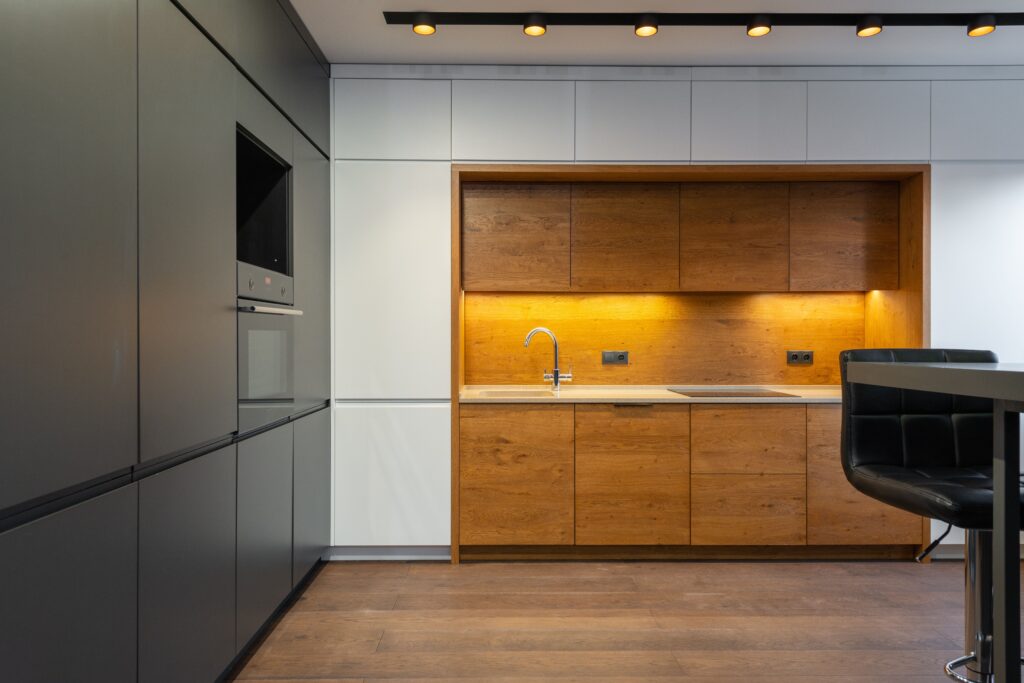
Kitchens can use either color temperature.
Cool white is popular for task areas because it creates a clean visual appearance. It can work well over countertops, sinks, islands, and food preparation areas.
Warm white can work well in kitchens designed as social spaces.
For example, a traditional kitchen with wood cabinets may look more comfortable under 3000K lighting.
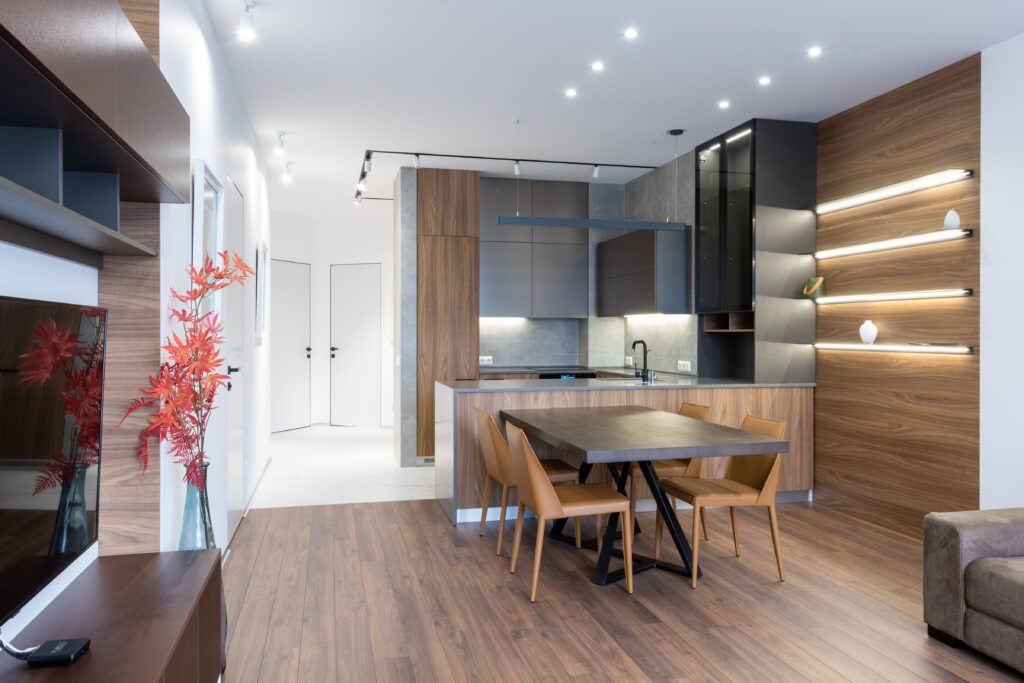
You can also combine lighting temperatures carefully.
Task lighting can use a neutral or cooler temperature, while decorative or dining-area lighting uses warmer light.
Which Is Better for a Bedroom?
Warm white is usually the more comfortable choice for bedrooms.
A 2700K or 3000K bulb can create a softer environment for relaxing in the evening.
Cool white can make a bedroom feel more active and work-focused.
If the bedroom also contains a desk, consider separate task lighting instead of using cool lighting throughout the room.
Which Is Better for a Bathroom?
Cool white can provide a crisp appearance in bathrooms.
It can be useful around mirrors, vanities, and grooming areas where clear visibility matters.
However, warm or neutral lighting can make the room feel more comfortable.
A layered lighting design can provide both task illumination and softer ambient light.
Which Is Better for a Living Room?
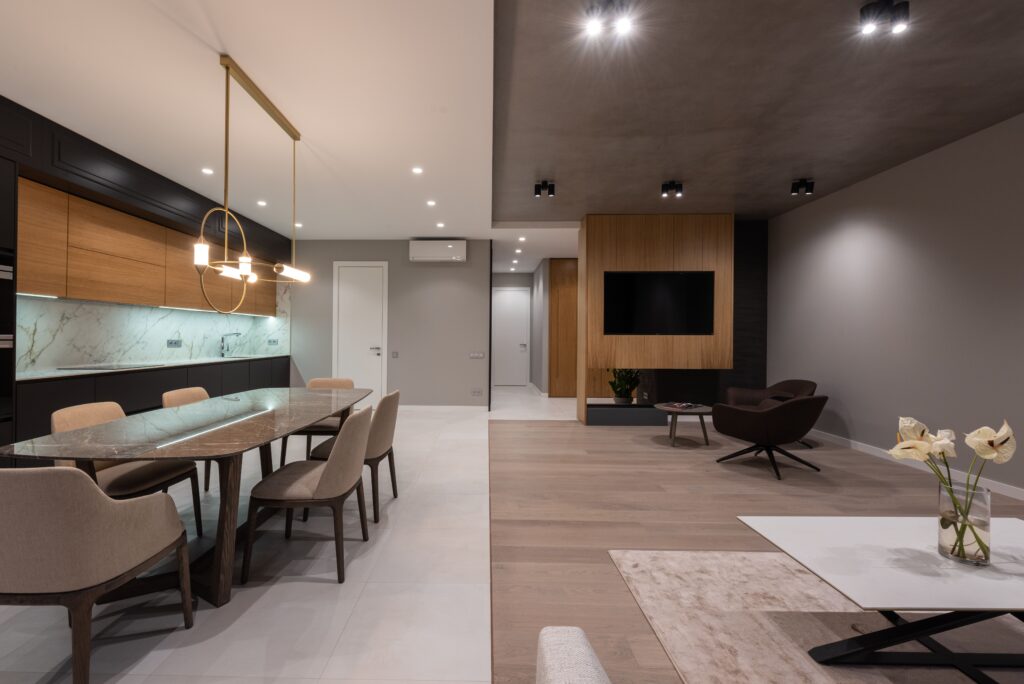
Warm white is a common choice for living rooms.
Its softer appearance works well with furniture, wood finishes, artwork, and other decorative elements.
If the living room doubles as a workspace, gaming area, or reading space, add separate task lighting rather than changing every fixture to a cooler temperature.
Warm White vs Cool White and Brightness
Color temperature and brightness are different measurements.
Kelvin tells you how the light appears.
Lumens describe the visible light output of a light source.
A 3000K bulb can produce more lumens than a 4000K bulb.
Therefore, don’t assume that cool white automatically means brighter.
When shopping for LED lighting, compare both Kelvin and lumen output.
Warm White vs Cool White and CRI
CRI stands for Color Rendering Index.
It indicates how accurately a light source reveals colors compared with a reference source.
A higher CRI can be useful in kitchens, dressing areas, art spaces, retail environments, and other locations where accurate color appearance matters.
CRI and Kelvin measure different characteristics.
A warm white LED can have high CRI, and a cool white LED can also have high CRI.
How Light Temperature Affects Interior Design
Color temperature can change the visual character of a room.
Warm lighting can make a space feel softer and more traditional.
Cooler lighting can create a cleaner and more contemporary appearance.
Wall colors also affect the result.
Warm lighting can bring out yellow, beige, brown, and red tones. Cooler lighting can make whites, blues, and gray finishes appear cleaner.
Choosing Lighting for U.S. Homes
American homes often use different lighting temperatures throughout the property.
There is no requirement to use one Kelvin rating everywhere.
A practical approach is to choose lighting based on room function.
Bedrooms and living rooms can use warm white.
Kitchens, bathrooms, and home offices may benefit from neutral or cool white.
Garages and workshops can use cooler daylight-style lighting when strong visual clarity is needed.
Buying Tips
When comparing LED bulbs, look beyond the color name.
Check the Kelvin Rating
Product descriptions can use terms such as warm white, soft white, cool white, or daylight.
These names can vary between manufacturers.
The Kelvin rating provides a more useful comparison.
Check Lumens
Don’t use Kelvin to judge brightness.
Lumens indicate light output.
Choose the lumen level according to the room size, fixture type, and task.
Check CRI
A higher CRI can help colors appear more naturally.
This is useful in kitchens, dressing areas, artwork spaces, and rooms where color accuracy matters.
Check Dimming Compatibility
Not every LED bulb works with every dimmer.
If you want adjustable brightness, check that the bulb and dimmer are compatible.
Check the Bulb Base
Common U.S. household bases include E26 and E12.
Always check the fixture specification before buying.
Common Mistakes
Choosing Only by Appearance
A bulb may look suitable in a store or product photograph but produce a different effect in your room.
Consider the wall color, flooring, furniture, and existing fixtures.
Using One Color Temperature Everywhere
Different rooms have different purposes.
Using the same Kelvin rating throughout the house can make some spaces feel less comfortable or less functional.
Assuming Cool White Is Brighter
Color temperature doesn’t determine lumen output.
Compare lumens when brightness is the priority.
Mixing Temperatures Without a Plan
Different color temperatures can look inconsistent when they are close together in the same visual area.
Try to keep connected fixtures within a similar range unless you’re intentionally creating separate lighting zones.
Ignoring Existing Bulbs
Replacing one bulb while leaving several different color temperatures nearby can create an uneven appearance.
Check the surrounding lighting before making changes.
Installation and Placement
Replacing a household LED bulb is usually straightforward when the fixture and bulb are compatible.
Turn off the light before replacing the bulb.
Allow a hot bulb to cool before handling it.
Don’t exceed the fixture’s maximum wattage or other listed requirements.
For recessed fixtures, enclosed fixtures, damp locations, or specialty installations, confirm that the selected bulb is rated for the application.
For hardwired lighting modifications, use a qualified electrician.
Layer Your Lighting
A well-designed room often uses three lighting layers:
- Ambient lighting
- Task lighting
- Accent lighting
Warm white can provide comfortable ambient lighting, while neutral or cool lighting can serve specific task areas.
This approach can prevent the need to use one color temperature for every purpose.
Maintenance
LED bulbs require little routine maintenance.
Keep bulbs and fixtures free from dust.
Turn off the power before cleaning.
Use a soft, dry or slightly damp cloth where appropriate for the fixture manufacturer’s instructions.
Don’t use abrasive cleaners on finished surfaces.
Check bulbs for flickering, unusual heat, damaged bases, or inconsistent operation.
A damaged fixture should be inspected before continued use.
Room-by-Room U.S. Recommendations
Living Room
Warm white around 2700K to 3000K can create a comfortable environment for relaxing, watching television, and entertaining.
Bedroom
Warm white is generally a good choice for bedrooms.
It provides a softer evening appearance than cooler temperatures.
Dining Room
Warm white can complement wood furniture, dining tables, and traditional interior styles.
Pendant lights and chandeliers often work well with warmer LEDs.
Kitchen
Neutral to cool white can suit countertops and food preparation areas.
Warm white can work well for decorative or dining zones.
Bathroom
Neutral or cool white can provide clear illumination around mirrors and vanities.
Use products rated for the specific bathroom environment.
Home Office
Neutral or cool white can suit focused work.
Avoid excessive brightness and glare from poorly positioned fixtures.
Garage
Cooler lighting can provide strong visual clarity for storage, maintenance, and hobbies.
Outdoor Areas
Warm white can create a welcoming appearance around patios, porches, and entertaining areas.
Cooler lighting may be preferred for security or task-focused applications.
What Is the Difference Between Warm White and Cool White for Energy Use?
Color temperature itself doesn’t determine energy consumption.
A 3000K LED and a 4000K LED with the same wattage can use similar amounts of electricity.
Actual energy use depends on wattage, operating time, controls, and the efficiency of the lighting product.
If reducing electricity use is your goal, compare wattage and lumens rather than Kelvin alone.
What Is the Difference Between Warm White and Cool White for Eyes?
There isn’t one color temperature that is best for every situation.
Comfort depends on brightness, glare, contrast, room conditions, and what you’re doing.
Warm lighting is often preferred for relaxed evening environments.
Cooler lighting can be useful for detailed daytime tasks.
The key is to avoid excessive brightness and direct glare.
What Is the Difference Between Warm White and Cool White for Interior Design?
Warm white tends to complement traditional, rustic, and comfortable interior styles.
Cool white can suit modern, minimalist, industrial, and work-focused spaces.
However, design style isn’t a strict rule.
The best choice is the one that works with the room’s materials, colors, furniture, and purpose.
Read Also: Switched Fused Connection Units
FAQs
What is the difference between warm white and cool white?
Warm white looks more yellow or golden, while cool white looks cleaner and whiter.
Is 3000K warm white?
Yes. 3000K is commonly considered warm white.
Is 4000K cool white?
Yes. 4000K is commonly described as cool or neutral-cool white, depending on the manufacturer.
Which is better for bedrooms?
Warm white is generally preferred.
Which is better for kitchens?
Cool or neutral white can work well for task lighting.
Which is better for living rooms?
Warm white is a common choice.
Does cool white mean brighter?
No. Brightness is measured in lumens.
Does warm white use less electricity?
Not necessarily. Energy use depends mainly on wattage and operating time.
Can warm and cool white be used together?
Yes, when different lighting zones have clear purposes.
What Kelvin is best for a home?
It depends on the room. Around 2700K–3000K often suits relaxing spaces, while 3500K–5000K can suit task areas.
Conclusion
Understanding what is the difference between warm white and cool white makes LED lighting decisions easier.
Warm white creates a softer, more comfortable appearance and often suits bedrooms, living rooms, dining rooms, and decorative areas. Cool white provides a cleaner appearance that can work well in kitchens, bathrooms, offices, garages, and task-focused spaces.
Don’t choose lighting by color temperature alone. Compare Kelvin, lumens, CRI, bulb compatibility, dimming support, and fixture requirements.
For U.S. homes, the most practical approach is to choose lighting according to the function of each room rather than using one color temperature throughout the entire property.