
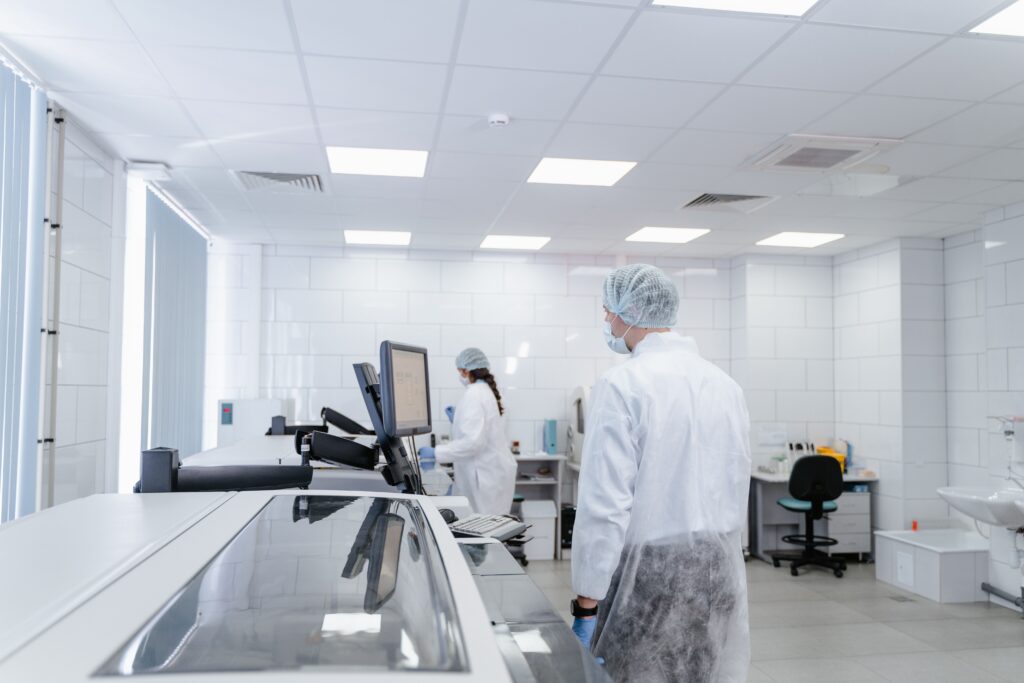

Commercial spaces need lighting that is bright, comfortable, and easy to maintain. Offices, schools, retail stores, medical facilities, and workshops often use recessed ceiling fixtures because they provide broad and even illumination.
An led parabolic troffer – 2×4 is a popular option for replacing older fluorescent fixtures. Its size fits the common 2-by-4-foot ceiling grid, while its louver design helps control glare and light distribution.
What Is an LED Parabolic Troffer 2×4?
An led parabolic troffer – 2×4 is a recessed commercial ceiling fixture designed to fit a standard 2-by-4-foot ceiling opening. It uses LED technology and a parabolic louver to distribute light while helping reduce direct glare in offices, classrooms, and other work areas.
The fixture is often used as a replacement for traditional fluorescent troffers.
LED versions can provide a cleaner lighting appearance and reduce the need for frequent lamp replacement.

How a Parabolic Troffer Works
A parabolic troffer uses a louver with curved cells or reflectors.
The louver helps control the direction of light leaving the fixture.
This can reduce direct views of the light source from common viewing angles.
That feature can be useful in spaces where people spend long periods looking at screens, reading documents, or performing detailed work.
The actual performance depends on the fixture’s design, optics, lumen output, and installation height.
Where to Use a 2×4 Troffer
The standard 2-by-4-foot format works well in many commercial ceiling systems.
Offices
Offices often need consistent lighting across desks and workstations.
A properly spaced troffer layout can provide general illumination without relying on a large number of separate fixtures.
Classrooms
Classrooms need clear visibility for students and teachers.
Controlled light distribution can help create a comfortable environment for reading, writing, and screen-based learning.
Retail Stores
Retail spaces need enough light to make products easy to see.
The fixture selection should match the store’s ceiling height, layout, product displays, and desired lighting appearance.
Healthcare Facilities
Clinics and other healthcare spaces can have specific lighting needs.
Color rendering, brightness, glare control, cleaning requirements, and applicable facility standards should be reviewed before selecting fixtures.
Workshops and Commercial Areas
Workshops may need stronger illumination than a standard office.
Consider the work being performed, ceiling height, surface colors, and potential shadows before choosing the lumen output.
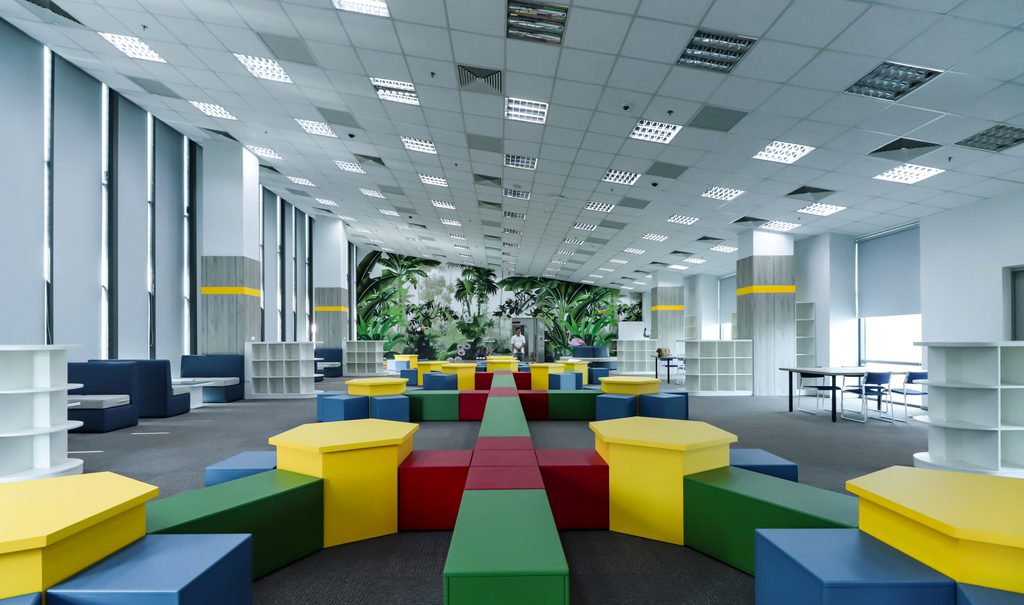
Benefits of LED Troffers
Lower Energy Use
LED fixtures can use less electricity than older fluorescent systems while providing comparable or greater light output.
Actual savings depend on the existing fixture, operating hours, electricity rate, and LED model selected.
Long Operating Life
LED fixtures generally have long rated operating lives.
This can reduce the frequency of lamp replacement, especially in large commercial buildings.
Better Lighting Control
Modern LED troffers are available with different distributions and control options.
Some models support dimming, occupancy sensors, daylight controls, or building automation systems.
Reduced Maintenance
Traditional fluorescent fixtures require lamp replacement and may also need ballast maintenance.
Integrated LED fixtures can reduce these maintenance tasks.
However, the entire fixture may need replacement if the LED system is not designed for component replacement.
Understanding Lumen Output
Lumens measure the amount of visible light produced by a fixture.
Do not choose a troffer based on wattage alone.
Two fixtures can use similar amounts of power while producing different amounts of light.
Before buying, compare the fixture’s lumen rating with the lighting level required for the space.
The right output also depends on mounting height and fixture spacing.
Choosing the Right Color Temperature
Color temperature can influence the mood and appearance of a space.
3000K
A 3000K fixture produces a warmer white appearance.
It can work well in areas where a softer atmosphere is preferred.
3500K
3500K provides a balanced white appearance.
It can suit offices, schools, reception areas, and other commercial interiors.
4000K
4000K is a common choice for offices and work environments.
It provides a clean white appearance without the stronger blue tone associated with higher color temperatures.
5000K
5000K produces a cooler appearance that resembles natural daylight more closely.
It may suit workshops, utility areas, warehouses, and spaces where strong visual clarity is important.
The best choice depends on the space and the tasks performed there.
Color Rendering Matters
Color rendering affects how accurately objects appear under artificial light.
Look for the fixture’s CRI rating when color accuracy matters.
Higher CRI can be useful in retail stores, healthcare settings, classrooms, design studios, and work areas where people need to distinguish colors accurately.
A high CRI does not automatically mean the fixture is brighter.
CRI and lumen output describe different aspects of lighting performance.
Glare Control
One reason businesses consider an led parabolic troffer – 2×4 is glare control.
Glare can become uncomfortable when bright fixtures are positioned within a person’s direct field of view.
This can be especially noticeable in offices with computer monitors.
A parabolic louver can help control the viewing angle of the light source.
Still, fixture placement matters.
Poor spacing or excessive brightness can create glare even when the fixture has a well-designed louver.
Ceiling Compatibility
Before ordering, measure the existing ceiling opening.
A standard 2-by-4-foot fixture is designed for common commercial ceiling grids, but actual dimensions and mounting details can vary.
Check:
- Fixture dimensions
- Ceiling type
- Mounting method
- Junction-box requirements
- Driver location
- Emergency-lighting provisions
- Access requirements
A quick measurement can prevent installation problems later.
Recessed, Surface, and Suspended Options
Not every commercial space has a recessed ceiling.
If a grid ceiling is unavailable, surface-mounted or suspended LED fixtures may be better choices.
Some manufacturers offer similar lighting performance across different mounting styles.
Choose the mounting method based on the building’s ceiling structure and the desired appearance.
Buying Tips for 2×4 LED Troffers
Before buying an led parabolic troffer – 2×4, check the fixture size, light output, color temperature, voltage, controls, and certification.
Do not choose a fixture by wattage alone.
Check the Dimensions
Most 2×4 troffers are made for standard commercial ceiling grids. Still, measure the existing opening before ordering.
Check the fixture length, width, and depth.
Some products are close to 48 by 24 inches, but the actual dimensions can vary.
Compare Lumens
Lumens tell you how much light the fixture produces.
For example, current 2×4 commercial troffers are available with different output levels. Some models offer around 3,200 to 4,480 lumens, while other products provide higher output.
Choose the output based on the room and the work performed there.
Check the Voltage
Commercial fixtures may support a wide voltage range.
Some 2×4 models are designed for 120–277V systems. Other products may support a different range.
Always match the fixture to the building’s electrical system.
Look at the Controls
Some LED troffers support 0-10V dimming.
Others may work with occupancy sensors, daylight controls, or smart building systems.
Check compatibility before buying the fixture and controls together.
Common Buying Mistakes
Choosing the Highest Lumen Output
More light is not always better.
Too much light can create glare and an uncomfortable work environment.
Choose enough light for the task without over-lighting the room.
Ignoring Color Temperature
A 3000K fixture looks different from a 4000K or 5000K fixture.
For many offices, schools, and commercial spaces, 3500K or 4000K can provide a balanced appearance.
Higher color temperatures may work better in some workshops or utility areas.
Forgetting Glare
A fixture can be bright without being comfortable.
Look at the louver or optical design before making a decision.
Parabolic designs can help control the direction of light, but spacing and mounting height still matter.
Buying Without Checking the Ceiling
Do not assume every 2×4 fixture will fit every ceiling.
Check the T-grid size and fixture dimensions before ordering.
Installation and Placement
Installation should follow the manufacturer’s instructions and applicable electrical requirements.
A typical recessed troffer is placed into the ceiling grid and connected to the building’s electrical supply.
Turn Off the Power
Power should be disconnected before installation or maintenance.
Manufacturer installation guides for LED troffers specifically warn installers to disconnect power before beginning work.
Check the Ceiling Grid
Place the fixture carefully into the ceiling opening.
Make sure the fixture is properly supported and secured.
Some installation instructions also require support wires to be connected to the building structure.
Follow the Wiring Diagram
Connect the line, neutral, and ground according to the manufacturer’s instructions.
If the fixture supports dimming, the control wiring must also be connected correctly.
Do not guess the wiring.
Use a Qualified Electrician
Commercial electrical work can involve building codes, branch circuits, grounding, and other requirements.
Manufacturer guidance for LED troffers recommends installation by qualified personnel familiar with electrical systems and applicable codes.
Maintenance and Cleaning
An led parabolic troffer – 2×4 usually needs less routine maintenance than an older fluorescent fixture.
That does not mean maintenance can be ignored.
Clean the Louver
Dust can collect on the louver and reduce the fixture’s appearance and light output.
Use the cleaning method recommended by the manufacturer.
Check for Damage
Inspect the housing, louver, lens, and mounting components.
Replace damaged parts when required.
Watch for Flickering
Flickering can indicate a driver, wiring, control, or power problem.
Do not ignore unusual behavior.
Have the fixture checked by qualified personnel when necessary.
Keep the Ceiling Area Clear
Dust and debris around the fixture can affect the appearance of the ceiling.
A clean ceiling also makes the entire lighting system look more consistent.
Energy Planning
LED troffers can help reduce energy use compared with older fluorescent systems.
The actual savings depend on the existing fixtures, operating schedule, LED wattage, utility rate, and number of fixtures.
For a large commercial building, calculate the expected annual energy use before replacing the entire lighting system.
Add Occupancy Controls
Occupancy sensors can turn lights down or off when rooms are empty.
They can be useful in conference rooms, storage spaces, classrooms, and offices with irregular occupancy.
Use Daylight Controls
Rooms with large windows may receive enough natural light during part of the day.
Daylight controls can reduce electric lighting when natural light is available.
Consider Dimming
Dimming can provide another way to manage energy use.
However, the fixture and dimming system must be compatible.
Room-by-Room U.S. Recommendations
The right led parabolic troffer – 2×4 depends on how each room is used.
Offices
Choose comfortable light with good glare control.
A balanced color temperature can work well for desks and computer-based work.
Classrooms
Uniform illumination is important.
Avoid dark areas around desks, whiteboards, and teaching surfaces.
Retail Stores
Choose lighting that supports product visibility.
Pay attention to CRI when accurate product colors matter.
Healthcare Spaces
Healthcare facilities may have specific lighting standards and operational requirements.
Review the project’s specifications before selecting fixtures.
Workshops
Workshops may require higher light levels for detailed tasks.
Consider shadows, mounting height, and the type of work performed.
Conference Rooms
Use dimmable fixtures when possible.
Lower light levels may be useful for presentations, while brighter settings can support meetings and note-taking.
U.S. Commercial Lighting Considerations
Commercial lighting projects can involve electrical codes, energy requirements, building rules, and local regulations.
Product certifications can also matter.
For example, some commercial 2×4 troffers are listed by UL and may carry DLC qualifications.
Check the project specifications before ordering.
For larger renovations, also review local energy-code requirements and any applicable utility rebate programs.
Read Also: Ex Proof Lamp Safe Lighting
FAQs
What is a 2×4 LED troffer?
It is a recessed commercial ceiling fixture designed around the common 2-by-4-foot ceiling-grid format.
What does parabolic mean?
It refers to the curved louver design used to control the direction of light and help manage glare.
Are 2×4 LED troffers good for offices?
Yes. They are widely used in offices because they provide broad overhead illumination and can offer controlled light distribution.
What color temperature is best for an office?
3500K and 4000K are common choices. The best option depends on the room, tasks, and preferred appearance.
Can LED troffers be dimmed?
Many models can be dimmed, including products designed for 0-10V control. Always check the fixture specifications.
Can I replace fluorescent troffers with LEDs?
Yes. A full fixture replacement or a compatible retrofit kit may be possible.
Do LED troffers need a ballast?
Integrated LED fixtures generally use an LED driver rather than a traditional fluorescent ballast.
How long do LED troffers last?
Rated life varies by product. Some commercial models are rated for around 50,000 hours.
Are 2×4 troffers energy efficient?
LED models can provide efficient illumination compared with older fluorescent systems. Actual savings depend on the specific products and operating schedule.
Should a professional install a commercial troffer?
For electrical installations, especially in commercial buildings, qualified electrical personnel should perform the work in accordance with the manufacturer’s instructions and applicable codes.
Conclusion
Choosing the right led parabolic troffer – 2×4 starts with the room.
Look at the ceiling size, fixture dimensions, lumen output, color temperature, glare control, voltage, and lighting controls.
Do not assume that the brightest fixture is the best option.
Good commercial lighting should provide enough visibility while keeping glare and unnecessary energy use under control.
Installation also matters. The fixture must fit the ceiling grid and be properly supported and wired.
For retrofit projects, check whether the existing housing is suitable for the selected kit. Some retrofit systems are designed specifically for existing 2×4 housings, while others require a complete fixture replacement.
For U.S. offices, schools, retail spaces, workshops, and other commercial buildings, review the electrical and project requirements before ordering.
A well-planned IZK-led parabolic troffer – 2×4 installation can provide clean, consistent ceiling lighting with lower maintenance and useful control options for modern commercial spaces.


Pingback: Exit LED Sign for Safer Emergency Lighting - LED CCT